

Backflow prevention exists to stop contaminated water being drawn back into the public supply through a cross connection. The city’s cross connection control program therefore concentrates on exactly the premises that line 86th Street, 18th Avenue and Bay Parkway: food service, commercial kitchens and mixed use buildings.
Once a device is installed, it has to be tested every twelve months by a New York State certified tester. That is permanent, for the life of the device.
Here is why it matters more for a restaurant than for most owners. Failing to carry out the annual test can result in fines or the disconnection of your water service. For a residential building that is a very bad week. For a food business it is closed doors, because you cannot trade without water.
We are not going to quote a penalty figure, because the amounts sit in city rules and there is legislation before the City Council that would change them. The disconnection risk is the part worth planning around regardless of what the fine happens to be.
RB Mechanical Plumbing and Heating is third generation and owner operated, licensed master plumbers working in New York City since 1983. We are on Staten Island’s south shore, one bridge from Bensonhurst.
For a commercial tenant the practical problem with backflow is fragmentation. A testing company does the test. The form needs a licensed master plumber’s signature. If the device fails, repairs and overhauls may only be done by a licensed master plumber. That is three steps across potentially two companies, on a device that your trading depends on.
We are licensed master plumbers, so for a Bensonhurst kitchen that is one visit, one signature and one company if something needs fixing. On a device that could cost you your water supply, the gap between contractors is the risk.
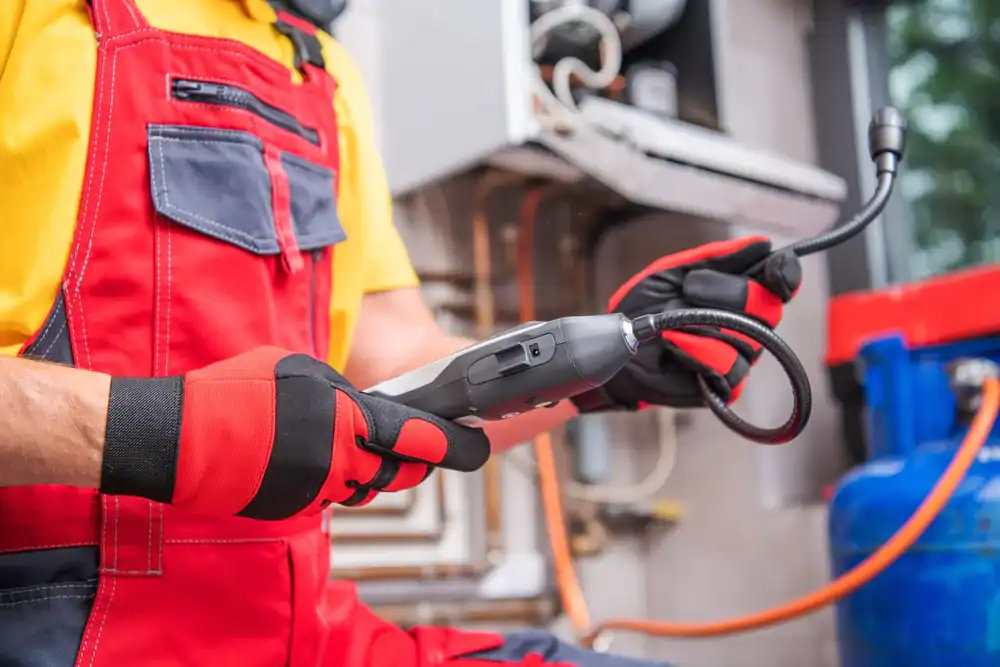
The test confirms that both check valves in the assembly are drip tight, which is the job the device exists to do. On a reduced pressure zone assembly or a double check valve assembly that is a short piece of work.
The paperwork is form GEN215B, parts A and B for an annual test, completed by the certified tester and signed by a licensed master plumber. We file the result with the Department of Environmental Protection through its online submission system.
If the device fails, it is repaired or overhauled and retested, and only a licensed master plumber may do that work. For a food business that is the moment where having one company matters, because a failed device with no plumber lined up is a scheduling problem you cannot afford.
If a device is being installed, relocated or swapped, a plumbing permit is required beforehand, installation must be by a licensed master plumber, and the initial report also needs the designing engineer’s or architect’s signature and is due within 30 days.

Ready to get started?
For the tenant: find out whether the premises has a device, where it is, and when it was last tested. That is not always obvious when you take over a space, and the obligation does not pause because the business changed hands.
For the landlord: a device on your building is attached to your property, and a lapsed test is a problem for the building, not only the tenant trading today.
For both: check what address the Department of Environmental Protection holds for the notice. On a building that has changed hands or changed agent, that is often where the reminder is going.
And check the tester’s certification is current. The roster published on the Department’s own site is years out of date with expiry dates long passed. The New York State Department of Health is the source for a current list.

Food service is one of the main categories the cross connection control program is aimed at, because of the way water is used on the premises. Many Bensonhurst kitchens have a device, and plenty of operators do not know it.
Whether yours is required depends on the premises and what was filed. The practical first step is establishing whether a device is already fitted, which also tells you whether an annual test obligation has been running without anyone acting on it.
Practically, the obligation runs with the premises and does not reset because the business changed hands. We are not your lawyer and the split between you and the landlord is a lease question.
What we would urge is finding out quickly rather than later. A device that has gone untested through a handover is a live issue, and the consequence can include water disconnection.
A failed test is not an instant shutoff. It means the device needs repair or overhaul and a retest, and only a licensed master plumber may carry that out.
The risk to your trading is the gap: a failed device, a testing company that cannot repair it, and a plumber who has to be found and scheduled. Using one company for the test and the repair removes that gap entirely.
Every twelve months, by a New York State certified tester, from installation onwards. The Department of Environmental Protection sends a notification letter when a test is due, though you should not rely on that reaching the right person in a building that has changed agent.
Separately, the Department’s handbook recommends assemblies are rebuilt or overhauled roughly every five years after installation. That is a different date and it is the one nobody tracks.
Yes, and on a Bensonhurst mixed use building that is often sensible. Both require a New York City licensed master plumber, which is the same credential.
If your kitchen also has gas work or a Local Law 152 gas piping inspection due, it is worth handling them together rather than arranging separate visits for the same licence.
Potentially your water supply. Failure to perform the annual test can result in fines or disconnection of water service, and a food business without water does not open.
We will not quote a penalty figure, because the amounts are set in city rules and legislation before the City Council would change them. For a trading kitchen the fine is not really the point.