
Three questions, and the answers decide whether your fit-out is straightforward or expensive.
First, what does the existing gas service actually carry, and what does your equipment need? Commercial cooking equipment draws far more than domestic appliances, and plenty of these buildings were piped long before the current tenant’s business existed. If the service needs upsizing, that is a different job with a different timeline.
Second, what has been filed? The previous tenant’s alterations are now the building’s history. An outstanding work-without-permit penalty on the property blocks any new permit, including yours. You can be ready to build and unable to get a permit because of something somebody else did in 2009.
Third, what else sits between you and gas being turned on? On a kitchen with a range hood suppression system, that system is installed and tested by a Licensed Master Fire Suppression Piping Contractor with an FDNY inspector, and the Department of Buildings Plumbing Unit checks it before the utility is allowed to supply gas.
None of that is unusual. All of it takes longer when it starts after the lease than before it.
RB Mechanical Plumbing and Heating is third generation and owner operated, licensed master plumbers working in New York City since 1983. We are on Staten Island’s south shore, one bridge from Bensonhurst.
On a commercial fit-out, the plumbing is rarely what causes a late opening. The sequence is. Gas piping by a Licensed Master Plumber, fire suppression by a different licensed trade with FDNY present, Department of Buildings Plumbing Unit review, then the utility.
Each of those depends on the one before it. Start the suppression system last and your gas connection waits on it, however finished the kitchen looks. We have run that sequence on New York City kitchens for decades and the single most useful thing we do is tell operators the order at the start, when it still costs nothing to change the plan.
We start with the equipment schedule and the existing service. That produces an honest answer about whether you are connecting or upsizing, which is the single biggest variable in cost and time.
Then the filing, through DOB NOW: Build. Paper filings are no longer accepted. A Limited Alteration Application covers repair and replacement of existing equipment and is self-permitted. New installation is a fuller filing.
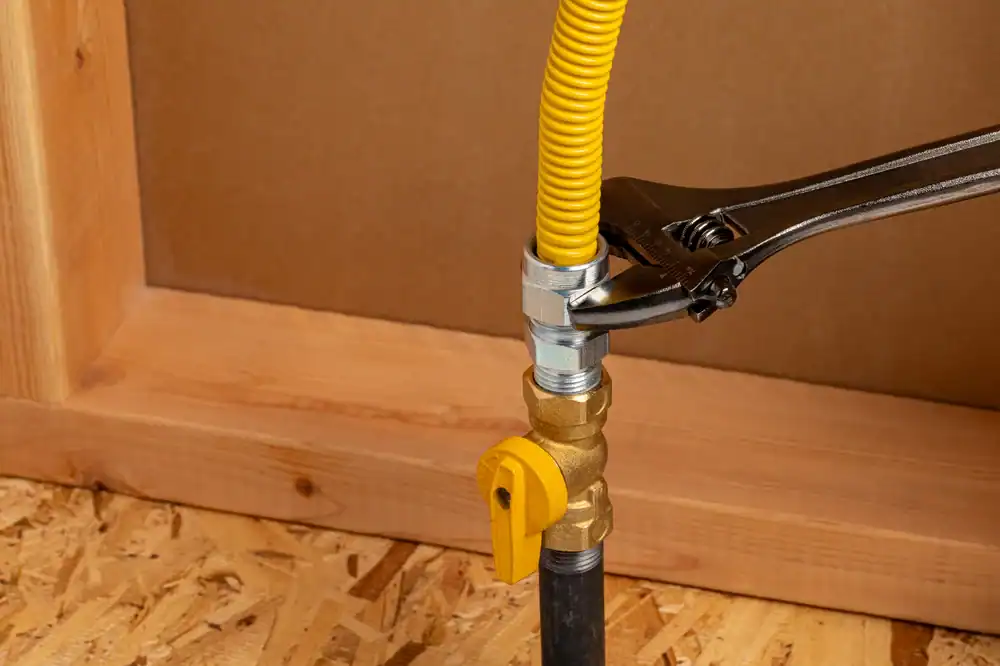
Then the work. Gas piping serving cooking equipment must be done by a Licensed Master Plumber. That is a rule rather than a recommendation.
Then sign off: the Gas Authorization Request through DOB NOW: Inspections, Plumbing Unit review, and a Gas Authorization Approved Report. The utility connects on that. Where a suppression system is involved, the Plumbing Unit checks it as part of allowing gas to be supplied.

Ready to get started?
Most of these buildings have apartments above the storefront, and the gas service is usually shared. That has two consequences worth planning for.
If the service has to be shut down or upsized, the residents are affected, not just the business. Whether they can be isolated depends on how the building was piped, which we establish before scheduling rather than on the day.
And if gas is fully shut off, restoration for the whole building needs a Department of Buildings authorization. So a commercial fit-out can leave families without cooking gas while a filing is reviewed, which is a conversation to have with the owner early.
For the owner specifically: a tenant’s unpermitted gas work becomes a problem attached to your building. It is worth knowing who is filing and checking that the licence is real, on the Department of Buildings License Search, before work starts in your storefront.

That is the question to answer before signing. It comes down to the size of the existing gas service against the load of your equipment schedule, and on these strips plenty of services were sized for a very different business.
If it cannot carry it, you are looking at upsizing, which is a bigger filing and a longer timeline. Far better known at the negotiating stage than after the rent starts.
Practically, yes. An outstanding work-without-permit penalty attached to the property must be cleared before any new permit can be obtained, and that includes the permit you need for your fit-out.
Who did the work does not change who is stuck. Establish the filing position on the building before you plan a schedule around it.
Because the Department of Buildings Plumbing Unit checks that work before the utility is allowed to supply gas. A range hood suppression system is installed and tested by a Licensed Master Fire Suppression Piping Contractor with an FDNY inspector present, and that is a separate trade from plumbing.
It is the most common cause of a late opening we see. Start it early rather than treating it as a finishing item.
Possibly, depending on whether the commercial branch can be isolated from the residential risers. That is established by testing the system, not by looking at the layout.
It matters because a full shutdown means the whole building waits on the restoration authorization, not just your kitchen. Worth agreeing with the owner before work starts.
A Licensed Master Plumber. Altering, relocating or removing gas piping for restaurant cooking equipment must be done by an LMP, and gas piping work across New York City is restricted to LMPs generally.
Verify the licence on the Department of Buildings License Search before work starts. An inspection that fails on who did the work is an expensive and entirely avoidable delay.
We will not give you a date before seeing the space and the equipment schedule, and anyone who does is guessing with your opening date.
What we will do at the first visit is tell you the sequence and which step is likely to be your constraint. On most Bensonhurst fit-outs it is not the pipe, it is the suppression system and the Plumbing Unit review.