

On a row house, the gas run is short and mostly yours. The fault is usually at an added connection: a dryer, a second kitchen, a replaced boiler. The buried service to the street is the part nobody thinks about, and the surface signs for that are outside, in the form of dead grass or failing plants over the line.
On a larger building, gas arrives and splits into risers feeding several apartments. The question becomes how much has to be shut off, which depends on whether the fault is on a branch or on the shared run. A pressure test answers that, and answering it properly is what keeps the shutdown small.
On a storefront with apartments above, the first place we look is the commercial branch. Those lines have usually been altered for whatever business was there before, sometimes repeatedly, sometimes without a filing.
Same neighborhood, three different diagnoses. It is worth telling us which one you have on the first call.
RB Mechanical Plumbing and Heating is third generation and owner operated, licensed master plumbers working in New York City since 1983. We are on Staten Island’s south shore, a short run from Gravesend, on the same gas utility.
Gravesend has a quirk worth knowing even outside an emergency: the neighborhood spans three community districts. Most of it sits in Brooklyn Community District 11, East Gravesend falls under Community District 15, and part of it towards Coney Island is in Community District 13.
That does not change anything about a leak, which is an emergency wherever your building sits. It does change your Local Law 152 gas piping inspection deadline, because those are set by community district. Owners here are often working from a neighbour’s date rather than their own, and a few blocks can be two years’ difference.
If there is an active smell, the utility or the fire department comes first and shuts the gas off. Always.
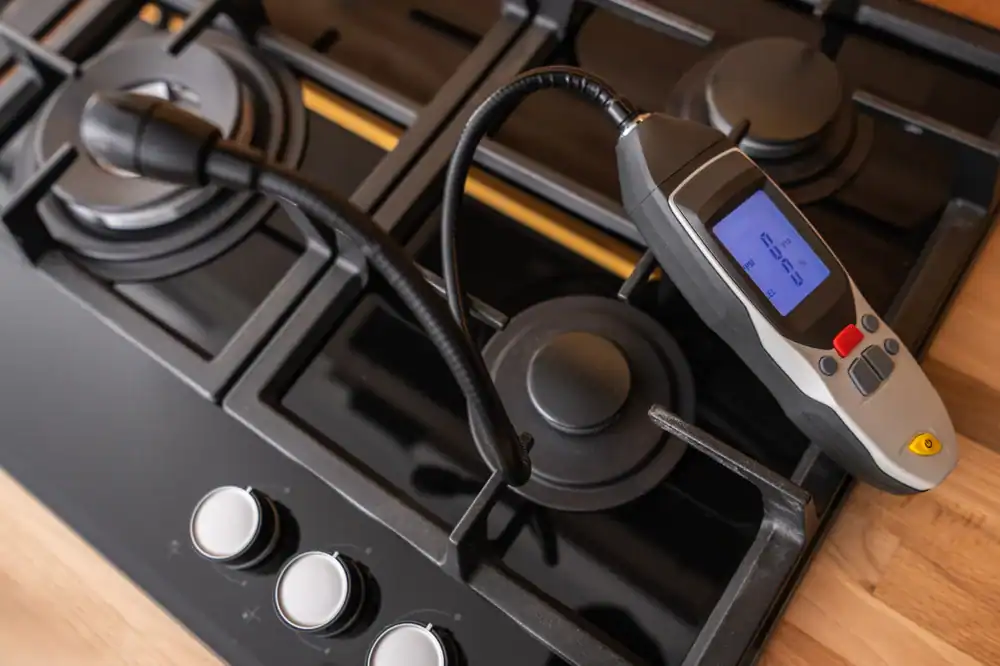
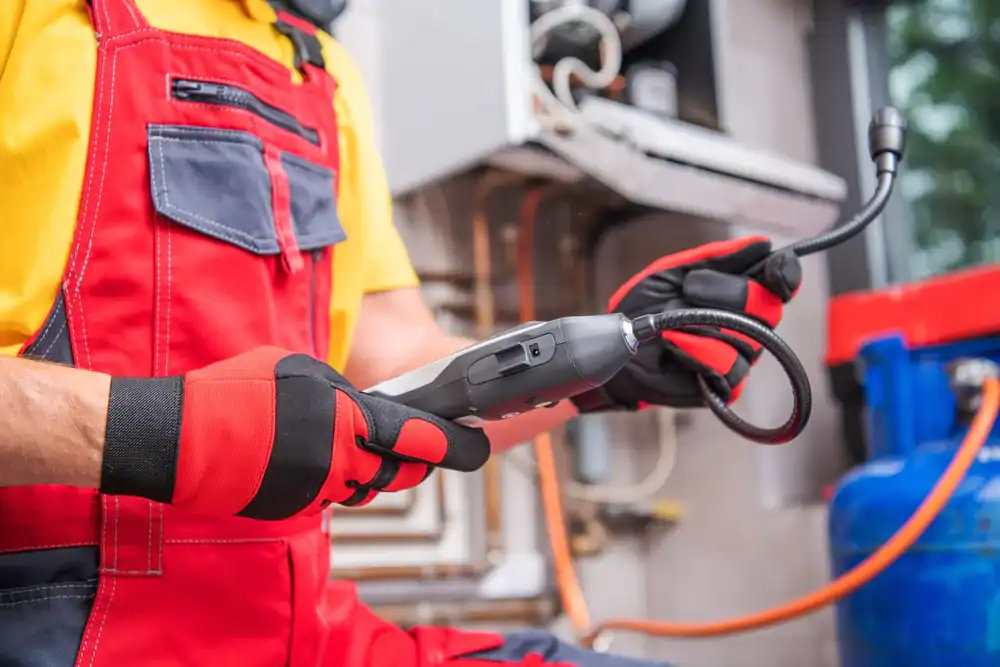
We then test rather than guess: a pressure test to find out whether the system holds, and a combustible gas detector on the exposed runs to find out where it does not. On a row house we check the exterior service as well as the interior piping.
Repairs are filed through DOB NOW: Build, since the Department of Buildings no longer accepts paper filings. Repair or replacement of existing equipment commonly runs under a self-permitted Limited Alteration Application.
Then restoration, which is a Department of Buildings matter rather than a utility one. We request the Gas Authorization through DOB NOW: Inspections, the Plumbing Unit reviews it, and the utility reconnects on that approval.

Ready to get started?
Leave. No switches, no intercom, no phone until you are outside. Call 911 or National Grid on 718-643-4050. Do not reopen a valve that has been closed.
In a shared building, tell the super or the managing agent as well, because your neighbours may be on the same line and will not know.
In a row house, check the outside too once things are safe. A strip of dead grass over the service run, plants failing along one line, or bubbling in a puddle after rain all point at a buried leak rather than something indoors.
And if your building has had gas work done that you are not sure was filed, say so when you call. It is far better dealt with as information you volunteered than as something an inspector finds.

Leave the building without touching any switch, appliance or intercom, and call 911 or National Grid on 718-643-4050 once you are outside. Both lines are answered around the clock.
Call us after that. We are not the emergency service. We are who locates the fault, repairs it under the right filing, and gets your gas legally restored.
In a row house, effectively yes, because it is one system. In a larger building it depends on whether the fault is on a branch line or on shared piping, and a pressure test is what establishes that.
Without testing, the safe assumption is always the bigger shutdown. Testing properly is usually what gets more people their gas back sooner.
For a leak, it does not matter at all. For your Local Law 152 gas piping inspection deadline, it matters a great deal, because those deadlines are set by community district and Gravesend spans three.
Most of Gravesend is in Community District 11 and East Gravesend is in District 15, both of which are on the same inspection cycle. Part of the neighborhood towards Coney Island is in District 13, which runs on a different one. The Department of City Planning publishes a lookup by address.
The utility reconnects, but only once the Department of Buildings has authorized it. A Department inspection is required to authorize restoration of gas service.
So the sequence is repair, filing, Gas Authorization Request through DOB NOW: Inspections, Plumbing Unit approval, then the utility. Chasing the utility on its own does not move that along.
Usually yes, and usually it is where we look first. Commercial spaces change use over the years and the gas gets altered each time, so a storefront branch tends to carry the most alterations and the most joints.
It is also where unfiled work shows up. Unpermitted gas work can bring significant fines and a loss of service for the whole building, so it is much better raised early than found at an inspection.
Both. Fuel gas piping repairs in New York City are restricted to a Licensed Master Plumber, which we are, so detection, repair, filing and the restoration sign off all stay with one company.
Where those are split between firms, the handover is where buildings lose days of gas. On an occupied building that is the part worth avoiding.