
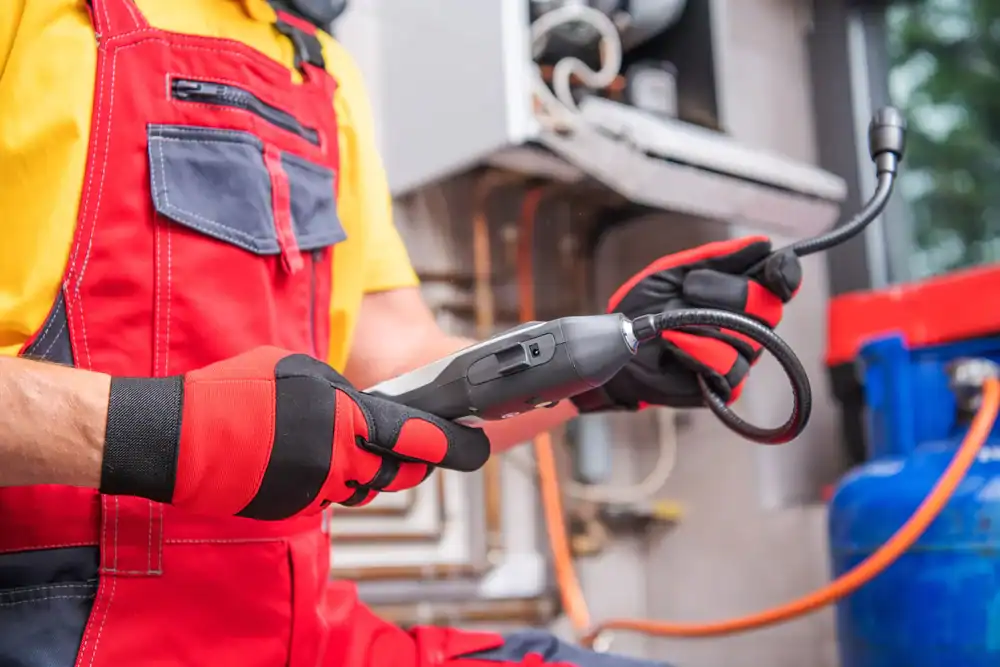

Most Huguenot homeowners don’t think about their gas lines until something forces them to. A smell that comes and goes. A National Grid visit that ends with “we didn’t find anything on our end.” That response is accurate — but it only covers the distribution main, not a single foot of the piping inside your home. Everything from your meter to your stove, your boiler, your water heater — that’s your responsibility, and it’s the part nobody checked.
For homes in Huguenot built between the 1940s and 1980s, that internal gas system could be 50, 60, even 70 years old. Black iron fittings corrode. Flexible connectors behind ranges and dryers degrade over decades of vibration and heat cycling. The odorant added to natural gas — the rotten egg smell people rely on — can actually dissipate through a process called odor fade, meaning a real leak can exist without triggering your nose at all.
When a licensed professional uses professional-grade gas detectors and infrared cameras to inspect your system, you get an actual answer. Not a guess, not a “probably fine.” You know what’s there, what’s not, and what — if anything — needs to happen next. For a neighborhood full of homeowners who’ve invested significantly in their properties, that clarity is worth a lot.
We’ve been operating in this market since 1983. That’s over 40 years of working on New York buildings — including the single-family colonials, raised ranches, and Cape Cods that make up the bulk of Huguenot’s housing stock. Staten Island is a primary service area, not an afterthought. We know National Grid’s protocols, understand how South Shore building stock behaves, and have handled the full range of NYC compliance work — from Local Law 152 gas piping inspections to DOB violation removal and permit filing.
Bobby and Rob run this operation as a father-and-son team. When something goes right or wrong on a job, there are named people accountable for it — not a dispatch center. Every technician sent to your home is a NYC Licensed Master Plumber, drug-tested and vetted before they ever set foot through your door. In a neighborhood like Huguenot, where homeownership runs deep and reputation matters, that kind of accountability isn’t a selling point — it’s a baseline expectation.

When you call us about a suspected gas leak, the first thing that happens is a real conversation — not a scripted intake form. You describe what you’re noticing, when it started, and what National Grid or the FDNY may have already told you. That context matters, because it shapes where the inspection starts.
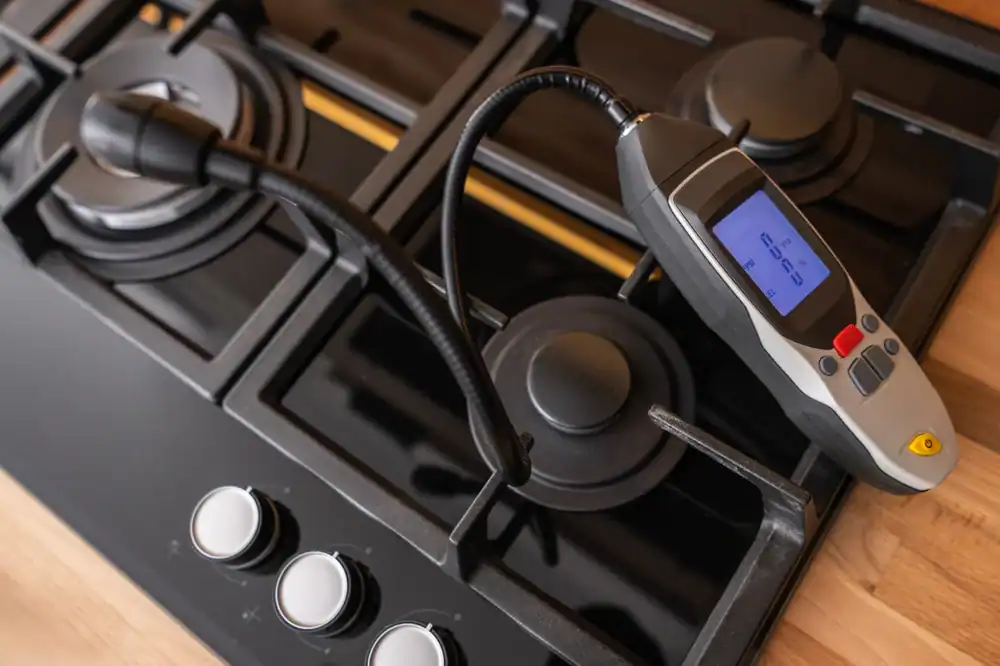
A Licensed Master Plumber arrives — the target is 30 to 60 minutes for true emergencies — with professional-grade electronic gas detectors and infrared cameras. The inspection covers the exposed gas piping inside your home, all appliance connections, valve fittings, and any areas of concern you’ve identified. Infrared cameras are especially useful in Huguenot homes where aging pipe runs behind walls or in basement utility spaces that haven’t been opened in years.
For homes near the southern Huguenot waterfront — the Huguenot Park area near Wolfe’s Pond Park — buried connections and below-grade fittings that may have been exposed to flooding or high water table conditions get particular attention.
If a leak is found, you get a clear explanation of what’s there and what the repair involves, with transparent pricing stated before any work begins. No hidden fees, no surprise scope. If the repair requires a NYC DOB permit — and most gas line work in New York does — we handle the filing. If National Grid coordination is needed to restore service after a shutoff, that’s handled too. The goal is one call, one visit, and a fully documented resolution.

Ready to get started?
Gas leak detection with us isn’t a single-point check. The inspection covers the full building-side gas system — from the meter connection through every branch line to every appliance. That includes the boiler in your basement, the water heater in your utility room, the range in your kitchen, and any outdoor gas connections if your property has them. Larger-lot homes in southern Huguenot near Wolfe’s Pond Park sometimes have outdoor gas lines for grills or generators that get overlooked entirely.
Beyond detection, we’re licensed to perform any repairs the inspection uncovers. That means you don’t get handed off to a second contractor — the same team that finds the problem fixes it. We also handle Local Law 152 gas piping inspections for multi-unit buildings in Huguenot, which carry a $5,000 civil penalty for non-compliance. And with NYC Local Law 157 requiring natural gas detectors in all residences by January 1, 2027, we can assess your current setup and advise on compliant placement — within one foot of the ceiling and within ten feet of any gas appliance — while already on-site.
If gas leak damage has occurred and you’re working with your homeowner’s insurance, we coordinate directly with insurers. That’s not something most plumbers offer, and in a stressful situation it makes a real difference. Pricing is transparent and provided upfront before work starts — no surprises.
This is one of the most common and most misunderstood situations homeowners in Huguenot face. When National Grid responds to a gas odor call, they’re checking the distribution infrastructure — the main line running to your building and the service connection up to your meter. That’s their system, and that’s what they’re authorized to inspect and repair. Everything on the building side of the meter — the gas lines running through your home to your boiler, your range, your water heater — belongs to you, and National Grid does not inspect or repair it.
So when they leave and tell you they didn’t find anything, that’s accurate. It just doesn’t tell you anything about the condition of your internal gas system. A licensed Master Plumber with professional-grade detection equipment is the right call for the building-side inspection. In older Huguenot homes — particularly those built in the 1950s through 1970s — the internal piping and appliance connections are the more likely source of an intermittent gas smell, and they’re exactly what a professional inspection covers.
There’s no reliable way to self-diagnose a gas leak with confidence, and the stakes are high enough that guessing isn’t a reasonable approach. The rotten egg odor associated with natural gas comes from mercaptan, an odorant that’s added specifically so people can detect leaks. But mercaptan can dissipate — a process called odor fade — which means a leak can be present even when you can’t smell anything. Intermittent smells, smells that seem stronger in one area of the house, or odors that appear when an appliance is running are all worth taking seriously.
Consumer-grade gas detectors sold at hardware stores can alert you to elevated gas concentrations, but they can’t pinpoint a source, assess severity, or produce any documentation useful for insurance or compliance purposes. A professional inspection with electronic gas detectors and infrared cameras gives you an actual answer. If there’s nothing there, you’ll know. If there is something, you’ll know exactly where it is and what needs to happen next.
It’s a fair question, and the honest answer is: age is a real factor. A significant portion of Huguenot’s housing stock was built between the 1940s and the 1980s, which means the gas infrastructure in those homes is now anywhere from 40 to 80 years old. Black iron pipe and galvanized steel fittings from that era weren’t designed for indefinite service. Corrosion builds up at joints, flexible connectors behind stoves and dryers degrade from years of vibration and heat, and valve seals dry out over time.
That doesn’t mean every older home has a problem — it means the probability of wear is higher, and the case for a professional inspection is stronger. For homes in the southern Huguenot area near Wolfe’s Pond Park, there’s an additional factor: properties that experienced flooding or storm surge during events like Hurricane Sandy may have had visible damage repaired without anyone professionally inspecting the gas connections in the basement or below grade. A thorough inspection addresses all of that.
Local Law 157 is a New York City law that requires natural gas detectors to be installed in all NYC residences — including single-family homes in Huguenot. The NYC Department of Buildings finalized the compliance rules in February 2024, and the deadline for full compliance is January 1, 2027. The law specifies where detectors must be placed: within one foot of the ceiling and within ten feet horizontally of any gas appliance. That means the placement of your detector relative to your stove, boiler, and water heater actually matters — it’s not just a matter of putting one somewhere in the house.
If you’re not sure whether your current detectors — if you have them — meet the placement requirements, a licensed plumber can assess that during a gas inspection visit. It’s worth getting right before the deadline, and it’s a straightforward thing to address while a professional is already on-site checking your gas system. Non-compliant properties face civil penalties, and the compliance window is shorter than it seems.
For most single-family homes in Huguenot, a thorough gas leak inspection takes between one and two hours. The actual time depends on the size of the home, how many gas appliances are connected, the complexity of the gas line layout, and whether there are any areas — finished basements, utility rooms, below-grade connections — that require more careful examination with infrared equipment.
The inspection itself is non-invasive in most cases. The technician uses electronic gas detectors and infrared cameras to check the piping, fittings, and appliance connections without opening walls or floors unless there’s a specific reason to investigate further. If a leak is identified, the time to repair depends on the location and nature of the problem. Simple fitting repairs can often be completed the same day. More involved repairs — like replacing a section of gas line — may require a permit filing with the NYC DOB, which we handle directly.
Yes, gas leak damage can be covered under a standard homeowner’s insurance policy, depending on the cause and the nature of the damage. Coverage typically applies when the leak results in property damage — to appliances, structural components, or personal property — rather than to the repair of the gas line itself. Every policy is different, so it’s worth reviewing yours or speaking with your insurer directly about what’s included.
What makes a real difference in the claims process is having proper documentation. A licensed Master Plumber can provide written findings, repair records, and permit documentation that insurers require when processing a claim. We work directly with insurance companies when gas leak damage is involved — handling the coordination so you’re not stuck as the middleman between a plumber and an adjuster during an already stressful situation. For Huguenot homeowners whose properties sit in or near FEMA flood zones in the southern part of the neighborhood, this coordination is especially relevant, since flood-related gas line damage can involve multiple layers of coverage and documentation.
Other Services we provide in Huguenot