
A gas shut down in Huguenot hits differently than it does in a Manhattan apartment building. You’re not a tenant who can pressure a landlord or wait for a building super to handle it. You own the home. That means the repair, the permits, the coordination with National Grid — all of it lands on you.
What you need is someone who can take that entire process off your plate and actually get it done right.
When the restoration is handled correctly, the timeline moves fast. National Grid’s own policy states that once all work is approved and the paperwork is in order, service can be restored in as little as one to two business days. The difference between that outcome and a six-week ordeal is almost entirely about who you hire and how well they know the process.
Huguenot’s housing stock adds another layer to this. The colonial and Victorian homes near Amboy Road and Seguine Avenue, the postwar ranches built in the 1960s — a lot of this gas infrastructure is aging. When National Grid detects a problem and shuts off service, the repair has to be done right and it has to pass the DOB pressure test on the first attempt.
There’s no shortcut that gets you back to hot showers and a working stove faster than doing the job correctly from the start.
We’ve been doing gas work on Staten Island since 1983. That’s not a tagline — it’s a timeline that covers every major regulatory change in NYC gas law, every shift in how National Grid handles restoration, and decades of working on the exact type of homes that line the streets of Huguenot.
Bobby and Rob Jr. are the business. When you call, you reach them. When the work gets done, we do it.
We hold a Licensed Master Plumber license (#1169) with a Gas Work Qualification, two FDNY Certificates of Fitness, and a Licensed Master Fire Suppression Contractor credential. These aren’t credentials collected for a website. They’re the legal requirements to do this work in New York City, and we hold all of them.
Under Local Law 150 of 2016, only a Licensed Master Plumber with a Gas Work Qualification can legally perform gas restoration work in NYC. Many contractors can’t say that. We can.
We’re based at 49 Englewood Ave in the 10309 zip code — right at the border of Prince’s Bay and Huguenot — which means we’ve been a South Shore neighbor for over four decades, not a company commuting in from another borough.
The moment National Grid locks your meter, the clock starts — but it doesn’t start moving in your favor until the right steps are taken in the right order. Here’s how we handle it.
First, we file an Emergency Work Notification with the NYC Department of Buildings. This is the legal gateway to beginning emergency gas restoration work, and it has to be filed by a Licensed Master Plumber. Once that’s in place, we perform the actual repair work — whether that’s replacing a section of aging pipe, correcting a compliance issue, or addressing whatever National Grid flagged when they shut the service off.
For homes along Huguenot Avenue or the older blocks near Drumgoole Road, that often means working with gas infrastructure that’s been in the ground for decades. That’s not a problem; it’s just the reality of South Shore housing stock, and it’s work we’ve been doing in Huguenot since before most of these homes had their first renovation.
Once the repair is complete, we schedule a DOB pressure test. This is a hard regulatory gate — National Grid will not restore service until the test passes and the inspection is signed off. After that, we coordinate directly with National Grid to schedule the reconnection.
From that point, National Grid’s own timeline takes over, and with everything filed correctly, restoration typically happens within one to five business days. The goal is always to get you to that finish line without a single restart.
Ready to get started?
Gas restoration in Huguenot isn’t just a plumbing job. It’s a multi-agency coordination effort that touches the NYC Department of Buildings, National Grid, and in some cases the FDNY. We hold the credentials to handle every piece of that process — which matters more than it might sound, because gaps between agencies are exactly where restorations stall.
The scope of work depends on what caused the shutoff. If National Grid detected a leak in the supply line, we repair or replace that section of pipe, test it, and permit it. If the shutdown was triggered by a failed Local Law 152 inspection — which applies to multi-family and commercial properties in Huguenot, not single-family homes — we correct the compliance deficiencies and update the DOB filing accordingly.
If appliances like your boiler or water heater need to be re-lit and inspected after service is restored, our FDNY Certificates of Fitness cover that work too.
Every job starts with a detailed cost breakdown before any work begins. No hidden charges, no surprise invoices at the end. For Huguenot homeowners who are personally absorbing the full cost of restoration — with no landlord splitting the bill — knowing exactly what you’re paying for before the work starts matters.
Penalties for non-compliance with NYC gas regulations can reach up to $10,000, which is another reason getting this done right the first time is worth it.
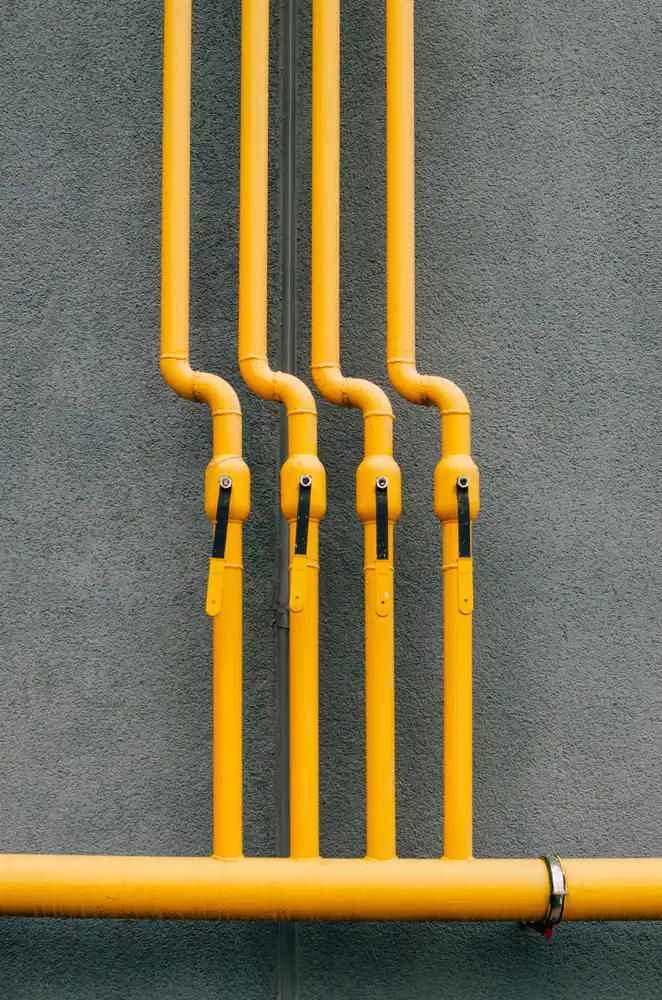
The first thing to understand is that you cannot restore the service yourself. Once National Grid locks the meter, only the utility can turn it back on — and they won’t do that until a Licensed Master Plumber has completed the repair, filed the required documentation with the NYC DOB, and passed the pressure test.
Tampering with a locked meter is illegal and will make the situation significantly worse.
Your first call should be to a Licensed Master Plumber who holds a Gas Work Qualification — that’s the specific credential required under Local Law 150 of 2016 for anyone doing gas work in New York City. From there, we file an Emergency Work Notification with the DOB, perform the repair, coordinate the inspection, and contact National Grid to schedule reconnection.
The sooner that process starts, the sooner National Grid can come out to Huguenot. That means working with National Grid specifically — not Con Edison, which handles electricity on Staten Island but not gas.
National Grid’s official position is that once all work is complete and approved, restoration takes one to two days, with a maximum of five business days. That timeline sounds reasonable — until you realize it doesn’t start until every piece of the process on the plumber’s side is finished and signed off.
The DOB pressure test has to pass, the permit documentation has to be in order, and the utility coordination has to be initiated correctly.
Where homeowners run into trouble is when a plumber misfiles paperwork, fails the pressure test, or doesn’t know National Grid’s specific procedures. Each of those setbacks resets the clock. For a Huguenot homeowner without heat in the middle of a Staten Island winter, that can mean the difference between one week and six weeks without gas.
The restoration timeline is largely determined by how competent and experienced your plumber is — not by National Grid’s schedule.
No — and this is one of the most important things to understand before you hire anyone. Since January 1, 2020, under Local Law 150 of 2016, all gas work in New York City must be performed by a Licensed Master Plumber who also holds a Gas Work Qualification.
A standard plumbing license is not enough. The Gas Work Qualification is a separate credential issued by the NYC DOB, and many licensed plumbers do not have it.
If you hire a plumber who lacks this qualification, they cannot legally perform the work, cannot file the required DOB documentation, and cannot get the pressure test scheduled through proper channels. The result is a job that stalls, fails, or has to be redone by a qualified plumber — while your home in Huguenot sits without heat, hot water, or cooking gas.
Before you hire anyone, ask for their LMP license number and confirm their Gas Work Qualification is active on the NYC DOB website. Our license is LMP #1169 — verifiable directly through the DOB.
The most common trigger is a detected gas leak — either found during a routine inspection by National Grid, reported by a neighbor, or discovered when a homeowner smells gas and calls it in. When National Grid responds and confirms a leak, they will shut off service at the meter before leaving the property. There’s no negotiation on that; it’s a safety protocol.
Other causes include work done without proper permits, failed inspections, or issues flagged during a Local Law 152 gas piping inspection for qualifying properties. In Huguenot, the age of the housing stock is a real factor.
Homes built in the 1950s and 1960s — and the older colonials near Amboy Road — may have gas piping that’s reached the end of its serviceable life. Aging pipe materials, corroded fittings, and outdated configurations are exactly what National Grid crews are trained to detect. If your home is older and hasn’t had a gas piping inspection in recent years, a shutoff may not come as a surprise — but it will come at the worst possible time if you’re not proactive about it.
Yes, always. There are no exceptions for gas restoration work in New York City. A Limited Alteration Application permit is required for non-emergency gas line work, and an Emergency Work Notification must be filed for emergency restoration situations.
Under Local Law 151 of 2016, self-certifications for gas work are no longer permitted — every job requires an actual DOB inspection, not just paperwork.
This is one of the reasons the process takes as long as it does, and also why the experience of your plumber matters so much. A plumber who files the wrong form, submits incomplete documentation, or doesn’t know the current DOB requirements will cause delays that have nothing to do with the physical repair.
We’ve been navigating NYC DOB permit filings for gas work since before the 2016 regulatory overhaul that changed the entire framework. That institutional knowledge — knowing exactly what to file, when, and how — is what keeps your restoration moving without unnecessary stops.
A proactive gas piping inspection gives you the chance to find and fix problems before National Grid does. When National Grid detects a leak and shuts off your service, you’re reacting — without heat, without hot water, and on a timeline you don’t control.
When you schedule an inspection on your own terms, you find the same issues in a non-emergency context, address them with a proper permit, and avoid the shutoff entirely.
For Huguenot homeowners specifically, this matters because of the neighborhood’s housing age. A home built in the 1960s near Drumgoole Road or Woodrow Road may have gas piping that’s never been fully evaluated. Older pipe materials, connections that were acceptable under previous code but don’t meet current standards, and fittings that have corroded over decades are all things a qualified inspection will catch.
While single-family homes in Huguenot are exempt from the mandatory Local Law 152 inspection cycle that applies to larger buildings, that exemption doesn’t mean the infrastructure is fine — it just means no one is legally required to check it unless something goes wrong. Getting ahead of that is always the better outcome.
Other Services we provide in Huguenot