
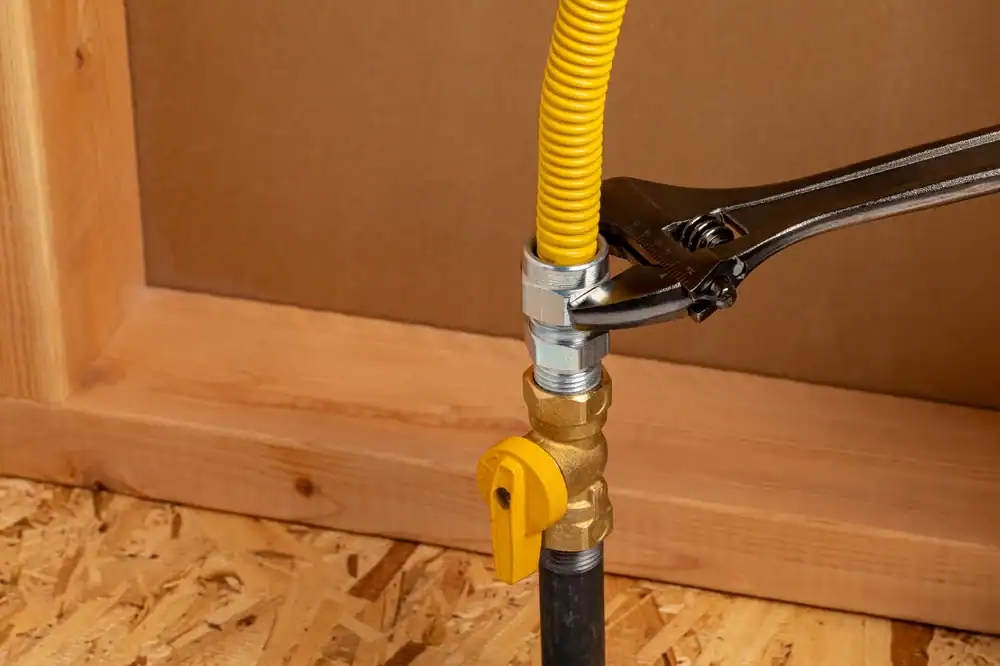

When you upgrade to a high-BTU professional range or a tankless water heater, the gas line that served your Huguenot home since 1979 may not be able to keep up. An undersized line doesn’t just hurt appliance performance — it can create pressure issues across your whole system. Getting the sizing right before the appliance goes in is the difference between a smooth installation and an expensive problem you find out about on day one.
For homeowners along Amboy Road, Huguenot Avenue, and the residential blocks running toward Raritan Bay, there’s another layer to consider. Properties in and around Huguenot Park that were affected by Superstorm Sandy have had mechanical systems replaced, structures elevated, and gas infrastructure altered over the past decade. If your home went through any of that work, your gas system may need a full evaluation before you add anything new — not just a quick hookup.
What you get at the end of a properly done installation is clarity. A permitted job, documented pressure testing, written records from a Licensed Master Plumber, and gas service that’s been authorized by Con Edison. That paper trail matters when you’re insuring a home valued at $735,000 or more, and it matters even more if you ever go to sell.
We’ve been doing licensed gas work in New York City since 1983. That’s not a round number chosen for marketing purposes — it’s the year we started, and the work has been continuous since. Over four decades, that means thousands of installations, hundreds of permit filings through the NYC Department of Buildings, and a track record that speaks for itself when a homeowner asks a neighbor for a referral.
In a neighborhood like Huguenot, where Italian-American and Irish-American families have owned the same homes for generations, word travels. We don’t last in this business by cutting corners on a block where people talk to each other. Our Licensed Master Plumber is on every job — not a subcontractor, not a name on a license while someone else does the work. The LMP is accountable for every line that goes in, every pressure test, and every permit filed.
Staten Island, including the South Shore and Huguenot, is part of our established service area. This isn’t a company stretching its reach — we’ve been working here, navigating Con Edison’s authorization process and NYC DOB requirements, for a long time.
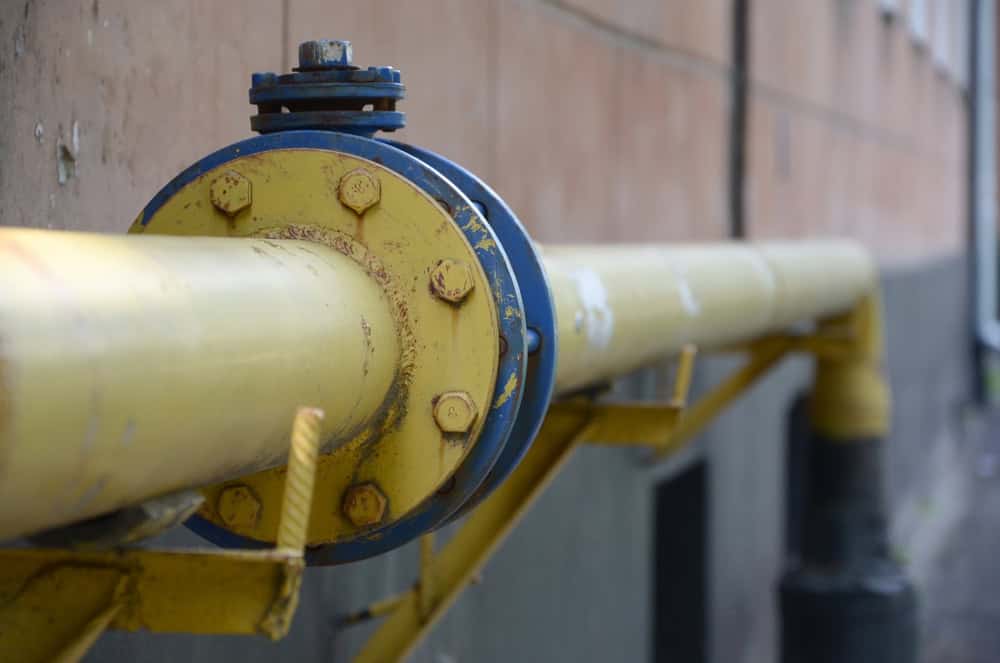
It starts with a load calculation. Before any pipe gets ordered or any permit gets filed, our Licensed Master Plumber calculates the total BTU demand of every appliance connected to your system — not just the one you’re adding. For a Huguenot home built in 1982 that’s now running a high-output range, a tankless water heater, and a gas dryer, that calculation often reveals that the existing line was never sized for that combined load. That finding shapes everything that comes next.
Once the scope is clear, we file the gas piping permit through DOB NOW — the NYC Department of Buildings’ online portal. This is a required step for all gas line work in New York City, and it applies to every property in Huguenot the same as it does in Manhattan. There are no exceptions for smaller jobs or single-appliance hookups. After the permit is issued, the installation happens: new pipe run, proper shutoff valves at each appliance, and full pressure testing at 1.5 times working pressure per NYC Fuel Gas Code.
The final step is Con Edison coordination. New gas service or any upsized capacity requires utility authorization before the meter is activated. We handle that communication directly, so you’re not left making calls to Con Edison on your own trying to figure out why your gas isn’t on yet. When the job is done, you receive written documentation of everything — permit records, test results, and LMP certification. For Huguenot homeowners who commute into the city via the Staten Island Railway or the SIM express buses, this full-service approach means the project gets handled without you needing to take days off to manage it yourself.

Ready to get started?
A gas line installation from us covers the full scope — not just the pipe. It includes the initial assessment of your existing gas infrastructure, a BTU load calculation for all connected appliances, DOB permit filing, the physical installation using properly rated materials, pressure testing, Con Edison coordination for service authorization, and written documentation delivered at job completion. Pricing runs $12 to $25 per linear foot depending on complexity and pipe type. For single-appliance hookups — a new range, a gas dryer, a water heater — most Huguenot installations fall between $500 and $2,000. Whole-home installations typically range from $1,300 to $3,500.
For Huguenot properties that include multifamily units, townhouse complexes, or commercial spaces along Hylan Boulevard and Amboy Road, Local Law 152 compliance is also part of the picture. LL152 requires mandatory gas piping inspections every four years for virtually all NYC buildings outside of one- and two-family homes. We handle the complete compliance cycle: the LMP inspection, any required repairs, and GPS-2 certification filing with the NYC DOB. Missing a filing deadline carries penalties up to $10,000 — having an LMP who can do the inspection and file the certification in one engagement eliminates that exposure entirely.
If your home is in a flood-affected section of Huguenot Park or you’ve had major renovation work done post-Sandy, the assessment phase may involve a more detailed evaluation of your existing gas system before any new work begins. That’s not an upsell — it’s what responsible gas work looks like when a home’s infrastructure has been through significant changes.
It depends on what’s already there and what you’re putting in. A professional-grade range can demand 60,000 BTUs or more — significantly higher than the standard residential ranges that most Huguenot homes were originally plumbed for in the 1970s and 80s. If your existing gas line was sized for a basic 35,000 BTU range, it may not be able to deliver adequate pressure to a high-output appliance, especially if other gas appliances are running at the same time.
The right way to find out is a load calculation that accounts for every appliance on your system — not just the range. That calculation looks at pipe diameter, total length of the run, and the combined BTU demand of everything connected. If the existing line is undersized, extending or replacing it is straightforward work for a Licensed Master Plumber. What you want to avoid is finding out the line can’t handle the load after the appliance is already installed and you’re trying to figure out why the burners won’t reach full output.
Yes, all gas line work in New York City requires a permit filed with the NYC Department of Buildings — and that includes every property in Huguenot, NY. There are no exceptions for smaller jobs, single-appliance hookups, or work inside an existing home. The permit must be filed through DOB NOW, the city’s online portal, and it must be filed by or on behalf of a Licensed Master Plumber.
We handle the permit filing as part of every installation. You don’t need to create a DOB NOW account, navigate the portal, or figure out which form applies to your project. Our LMP files the permit, the work gets done under that permit, and you receive documentation confirming everything was properly authorized. For Huguenot homeowners who don’t have time to manage government paperwork on top of a full commute schedule, having one contractor handle the entire process from permit to final documentation makes a real difference.
If your home went through flood remediation, structural elevation, or significant mechanical system replacement after Superstorm Sandy, your gas infrastructure may have been altered, disconnected, or partially replaced during that process. Before any new gas line work — whether it’s adding an appliance, installing a generator, or extending a line — the current state of your system needs to be assessed by a Licensed Master Plumber.
In some cases, post-Sandy work was done under emergency conditions and the documentation isn’t complete. In others, the system was properly repaired but the routing or sizing doesn’t match what was originally there. Either way, a thorough evaluation before new work begins protects you from building on top of an infrastructure problem you didn’t know existed. We’ve handled complex, multi-step gas system assessments and restorations in exactly these situations — it’s not a standard hookup scenario, and it shouldn’t be treated like one.
Local Law 152 is a New York City mandate requiring gas piping inspections every four years for virtually all NYC buildings, with the exception of one- and two-family homes. If you own or manage a multifamily building, a mixed-use property, a condo complex, or a commercial space in Huguenot — including properties along Amboy Road or Hylan Boulevard — LL152 applies to you.
The inspection must be performed by a Licensed Master Plumber or a Registered Journeyman Plumber under direct LMP supervision. After the inspection, the LMP files a GPS-2 certification electronically through DOB NOW confirming the building’s gas piping system is compliant. If violations are found during the inspection, they need to be repaired before the GPS-2 can be filed. Missing the filing deadline for your community district carries penalties up to $10,000. We handle the full LL152 cycle — inspection, any required repairs, and GPS-2 filing — so building owners in Huguenot aren’t left managing multiple contractors or navigating the DOB portal on their own.
The physical installation itself — running pipe, installing shutoff valves, pressure testing — typically takes anywhere from a few hours for a straightforward single-appliance hookup to a full day or more for a longer run or whole-home project. But the total timeline from first call to gas-on is longer than just the installation day, and that’s the part most homeowners don’t plan for.
Permit filing through DOB NOW adds time before work can begin. After installation, Con Edison needs to authorize any new service or upsized capacity before the meter is activated — and that coordination has its own timeline. For a standard appliance hookup in Huguenot with no complications, the full process from permit to gas activation typically runs a few days to about a week. More complex projects — whole-home re-piping, post-renovation assessments, or situations involving a prior Con Edison shutoff — can take longer. We manage every step of that timeline and keep you informed so there are no surprises about when your gas will be on.
Yes. Con Edison can shut off gas service if they identify a leak, a safety concern, or a compliance issue during a meter inspection or in response to a reported problem. When that happens, getting service restored isn’t as simple as calling to schedule a reconnection. The utility won’t reactivate gas to a property until the underlying issue has been identified, repaired by a Licensed Master Plumber, and documented — and in many cases, a DOB filing is required before Con Edison will send an inspector to authorize restoration.
For homeowners on the South Shore, including Huguenot, a winter gas shutoff is a serious disruption. No heat, no hot water, and potentially no cooking — in a neighborhood that sits along Raritan Bay with full coastal wind exposure during cold months. The fastest path to restoration is an LMP who knows the Con Edison authorization process and can move through the repair, documentation, and utility coordination steps without delay. We offer 24/7 emergency availability so you’re not waiting until Monday morning to get the process started.
Other Services we provide in Huguenot