

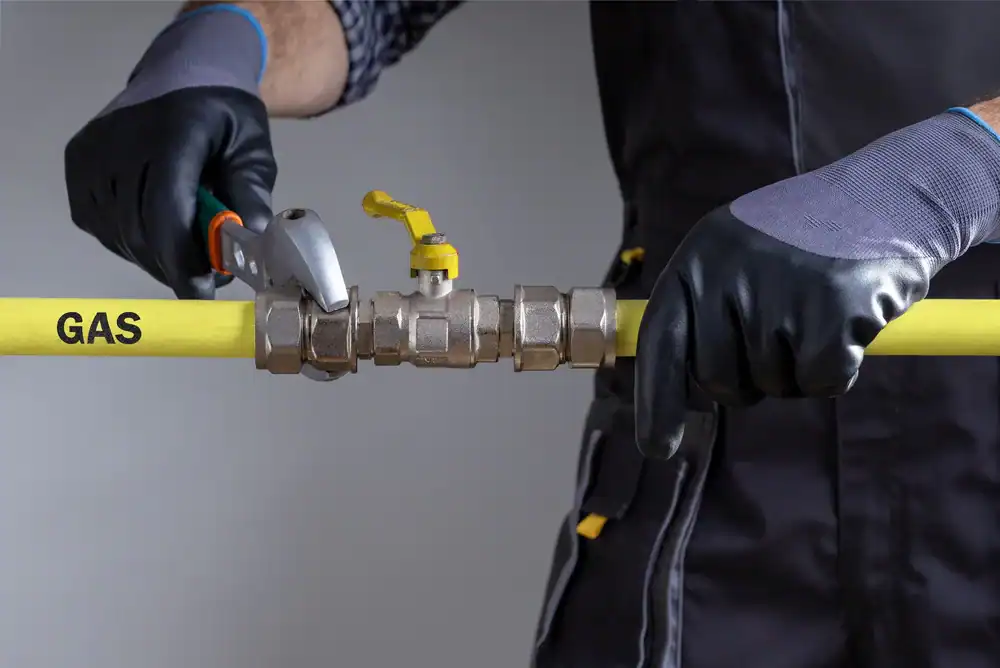
When you’ve got a gas issue — whether it’s a smell you can’t ignore, a shutoff notice from National Grid, or pipes that haven’t been touched since your house was built — the biggest thing you want is clarity. What’s actually wrong, what it takes to fix it, and how long before life is back to normal. That’s what a real diagnosis gives you, and it’s where this process starts.
Most homes in Huguenot were built between 1970 and 1999, right during Staten Island’s post-Verrazzano Bridge suburban expansion. That means the gas infrastructure in a lot of these homes is original — 25 to 55 years old, installed when the subdivision went up, and in many cases never professionally inspected since. Black iron fittings loosen over time. CSST installed in the 1980s wears down. Joints that were tight in 1985 aren’t necessarily tight today.
Getting ahead of that before it becomes an emergency is the difference between a routine repair and a full shutoff situation. Living on the South Shore also means your buried gas lines are dealing with conditions that inland neighborhoods don’t face. The moisture, the coastal soil near Raritan Bay, the freeze-thaw cycles — these accelerate corrosion on buried fittings. If your property sits anywhere near Wolfe’s Pond or the waterfront sections of Huguenot, there’s a real chance your buried lines have been under more stress than you’d expect. Knowing what you’re working with is the first step toward not having to deal with it in an emergency.
We’ve been working on Staten Island since 1983. Bobby and Rob — father and son — have spent four decades in the borough’s homes, including the same South Shore subdivisions that define Huguenot. We know what original 1980s gas infrastructure looks like in these houses. We know how it ages. And we know what National Grid expects before they’ll restore service to a home on Amboy Road or Huguenot Avenue.
This isn’t a company that treats Staten Island as an afterthought. It’s where we built our business, and where we’ve built our reputation — one job at a time, mostly through referrals from neighbors who told other neighbors. In a community like Huguenot, that kind of track record means something.
We hold a full NYC DOB Master Plumber license with the Gas Work Qualification endorsement — the specific credential required by New York City law to file permits for gas piping work. We’re fully insured, and every job comes with a written estimate before any work begins.
It starts with a call. If you’re smelling gas or dealing with a National Grid shutoff, that call can happen at any hour — we’re available 24/7 for gas emergencies, and there’s no after-hours surcharge. The same rate applies whether it’s a Tuesday afternoon or a Saturday night in February when the wind is coming off Raritan Bay and your heat is out.
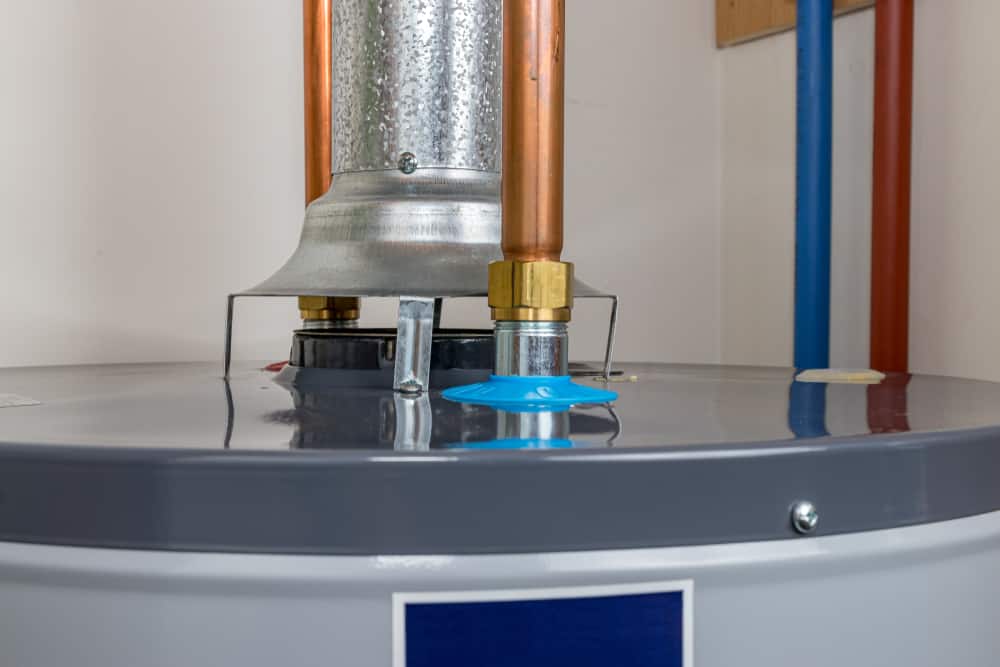
Once on-site, the first step is a full assessment of your gas system. For Huguenot homes built in the 1970s through the 1990s, that means looking at the original piping configuration, checking fittings and joints that have been in place for decades, and running a gas pressure test to confirm where the system stands. If there’s a leak, we isolate and diagnose it before any repair work begins. If the issue involves buried lines — which in coastal-adjacent properties can show accelerated corrosion — we explain the scope of work clearly before anything is opened up.
From there, the repair is completed under a proper NYC DOB permit. This matters because unpermitted gas work creates violations that follow the property — and in Staten Island, that means National Grid gets involved. After the repair, we pressure-test the system again to confirm integrity. Then comes the part a lot of plumbers leave homeowners to figure out on their own: coordinating with National Grid directly to restore service. We handle that coordination, which is the difference between getting your gas back in a reasonable timeframe and waiting days while you navigate the utility’s process alone.
Ready to get started?
Gas line work in Huguenot covers a range of situations, and the right scope depends entirely on what’s going on in your specific home. Emergency leak repairs are the most urgent — if you’re smelling sulfur or rotten eggs anywhere in your house, that’s not something to wait on. We respond to those calls around the clock, diagnose the source, and get the repair done under a proper permit with National Grid coordination included.
Corroded gas pipe replacement is one of the more common non-emergency jobs in this neighborhood. Original black iron piping from the 1970s and 1980s corrodes from the outside in, especially in homes closer to the South Shore waterfront where soil moisture and salt air exposure are higher. When a section of pipe has degraded past the point of repair, replacement is the only safe path forward — and doing it proactively costs significantly less than dealing with it after a utility shutoff.
Gas line rerouting comes up regularly in Huguenot homes when kitchens get renovated, new appliances get added, or layouts change. This requires a DOB permit, proper pressure testing after the work is complete, and in some cases a new connection approval from National Grid. Local Law 152 inspections are also part of the picture for property owners in Staten Island — the second compliance cycle runs through 2028, and non-compliance fines can reach $10,000 per year. We handle the full cycle from inspection through DOB filing, not just the inspection itself.

A National Grid shutoff in Huguenot means you can’t simply call the utility and ask them to turn it back on. Before service is restored, a Licensed Master Plumber with a Gas Work Qualification endorsement needs to assess the issue, complete any required repairs under a proper NYC DOB permit, and coordinate directly with National Grid to certify the work. National Grid controls the final restoration — we don’t flip a switch, but our documentation and coordination with the utility is what moves the process forward.
Where homeowners run into trouble is hiring a plumber who completes the repair but doesn’t know how to navigate the National Grid restoration process on Staten Island. That can add days to your wait — days without heat or hot water. We’ve handled this process for Staten Island properties for over 40 years and know exactly what National Grid needs to restore service efficiently. If you’re in this situation right now, calling sooner rather than later is the move.
The most reliable way to know is a professional gas pressure test, which measures whether your system holds pressure over time. A drop in pressure indicates a leak somewhere in the line — even if you can’t smell it yet. For homes in Huguenot built between 1970 and 1999, the honest answer is that most of this original gas infrastructure has never been professionally tested since installation. That doesn’t mean it’s failing, but it does mean there’s no documented baseline for how the system is performing.
Beyond pressure testing, a licensed plumber can visually assess the condition of accessible piping — looking for corrosion, joint degradation, and signs of wear that indicate a section is nearing the end of its useful life. In Huguenot homes closer to the waterfront or near Wolfe’s Pond, buried lines can show accelerated corrosion from moisture and coastal soil conditions. Catching that early — before it becomes a shutoff situation — is almost always less disruptive and less expensive than dealing with it after the fact.
Yes, in most cases. New York City requires a Licensed Master Plumber with a Gas Work Qualification endorsement to file permits for gas piping work — and that requirement applies to Staten Island the same as every other borough. The GWQ endorsement is a separate credential on top of a standard Master Plumber license, and not every plumber who advertises gas work actually holds it. If someone is offering to fix your gas line without pulling a permit, that’s a problem — unpermitted gas work creates violations that attach to your property and can complicate future sales, refinancing, and insurance claims.
The permit process also matters for National Grid restoration. After a repair is completed, National Grid needs documentation that the work was done by a licensed plumber under a valid permit before they’ll restore service. Skipping the permit doesn’t just create a legal issue — it can delay getting your gas back on. We handle all permit filing and DOB coordination as part of every gas line job.
Local Law 152 is a New York City law that requires all buildings with gas piping to have their gas systems inspected every four years by a Licensed Master Plumber. The law applies citywide — including Staten Island — and the second compliance cycle runs from 2024 through 2028. Buildings that missed the first cycle (2020–2023) are currently receiving Notices of Deficiency from the NYC Department of Buildings. Non-compliance fines can reach $10,000 per year, and National Grid has the authority to shut off gas service to buildings that remain out of compliance.
For Huguenot property owners — whether you own a single-family home, a multi-family property, or a building with multiple units — the responsibility for compliance falls on you. The inspection itself is just the first step. After the inspection, a written report must be filed with the DOB within a specific window, and any deficiencies found need to be corrected by a licensed plumber. We handle the complete process: inspection, report preparation, DOB filing, and any repair work required to bring the system into compliance.
It can be, depending on what’s going on with the buried portions of your gas line. For properties in Huguenot that sit closer to Raritan Bay, Wolfe’s Pond, or any of the flood-zone areas of the South Shore, buried gas lines are exposed to higher moisture levels, coastal soil conditions, and in some cases the lingering effects of soil disturbance from past storms. When that results in corroded or damaged buried pipe, the repair scope can expand to include excavation — which adds to the overall cost compared to an above-ground repair.
That said, the biggest cost driver in gas line repair is almost always how long a problem has been left unaddressed. A small leak caught during a routine inspection or pressure test is a straightforward repair. The same issue left alone until National Grid shuts off service becomes a more involved job with permit timelines, utility coordination, and potentially more extensive pipe replacement. Getting a proper assessment early — before something forces the issue — is consistently the less expensive path for South Shore homeowners.
Not every licensed plumber in New York City is legally authorized to file permits for gas piping work. Under Local Law 150 of 2016, a Licensed Master Plumber must also hold a separate Gas Work Qualification endorsement — which requires a minimum of six months of full-time supervised experience in gas work plus completion of a 16-hour DOB gas work training course. Without that specific endorsement, a plumber cannot legally file the permits required for gas line repair in New York City, including Staten Island.
This matters in Huguenot because the neighborhood has a mix of general plumbing contractors and full-service operations, and it’s not always obvious from a website or a phone call whether someone holds the GWQ endorsement. The simplest way to verify is to ask for the plumber’s NYC DOB license number and check it directly on the DOB’s online license lookup. We hold both the Master Plumber license and the Gas Work Qualification endorsement, and have been doing permitted gas line work on Staten Island for over 40 years — the kind of track record that matters when the job involves your family’s safety and your home’s compliance with city code.
Other Services we provide in Huguenot