
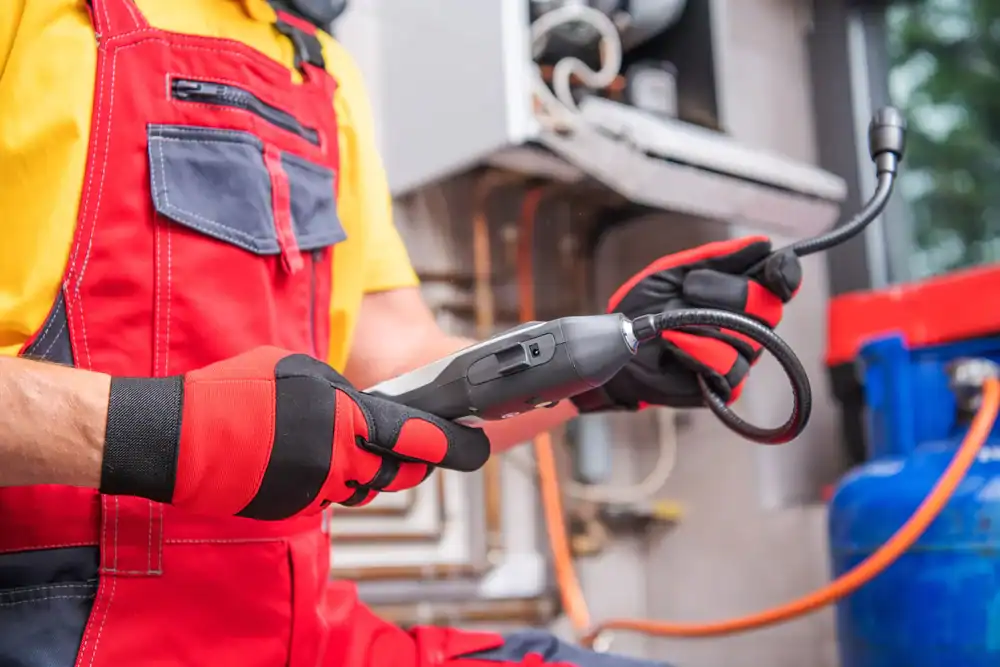

Most Prince’s Bay homeowners have more gas connections than they realize. A four-bedroom home with multi-zone heating, a gas stove, a water heater, a fireplace, and a dryer can have six, seven, even eight separate connection points. Each one is a potential leak location. We check all of them — not just the obvious spots — so you’re not left guessing.
If your home was repaired or rebuilt after Hurricane Sandy, that work is now more than a decade old. Gas connections made during rushed post-storm rebuilds in 2012 or 2013 weren’t always documented the way they should have been, and the hardware has been aging since. A thorough inspection today tells you whether that work is still holding up.
Living near Raritan Bay means your home deals with salt air and coastal humidity year-round. That environment accelerates corrosion on gas line fittings and exposed piping in ways that inland neighborhoods simply don’t experience. Catching early-stage corrosion before it becomes a leak is exactly what professional equipment finds and the human nose doesn’t.
We’ve been doing this work since 1983 — over 40 years operating in the NYC metro and serving the South Shore specifically. We’ve worked on the same types of homes that line the streets between Seguine Avenue and Wolfe’s Pond Park: pre-war builds, post-Sandy rebuilds, expanded colonials, and waterfront townhouses. We know what Prince’s Bay’s gas systems face.
Every technician who comes to your door is a NYC Licensed Master Plumber — the highest credential available for gas work in New York State. We’re also drug-tested and vetted before we’re ever sent to a job. Bobby and Rob run this operation as a family business, which means there are real names and real accountability behind every visit, not a dispatcher routing whoever’s available.
We also know National Grid’s protocols — the utility that serves Staten Island — so if your gas has been shut off or you’re dealing with a utility-side issue alongside a building-side problem, we know how to navigate both.

When you call about a gas smell or request an inspection, we start with a conversation. You’ll describe what you noticed — where you smelled it, when it happened, whether it comes and goes — and that information shapes where we start. Intermittent smells are actually one of the trickier situations, because odor fade is real. The odorant added to natural gas can dissipate under certain conditions, which means the absence of a smell doesn’t mean the absence of a leak.
Once on-site, we use professional-grade gas detectors and infrared cameras to sweep your home systematically. In a Prince’s Bay property with multiple gas appliances and zones, that means checking every connection point — not just the stove or the boiler, but flexible connectors behind appliances, piping in the basement or crawl space, and any lines running to a gas fireplace. Infrared cameras are particularly useful for finding leaks hidden behind walls or in areas you can’t see or reach directly.
If we find a leak, you’ll get a clear explanation of what was found, where it is, and what the repair involves — before any work begins. Pricing is stated upfront with no hidden fees. If the repair requires a DOB permit filing, we handle that paperwork too, which matters for Prince’s Bay homeowners who’ve had work done and need proper documentation on file.
Ready to get started?
Our gas leak detection isn’t a one-item checklist. The visit covers your full gas system — appliance connections, exposed piping, flexible connectors, and any lines running to heating zones or a fireplace. For homes near the Raritan Bay waterfront, that includes a close look at below-grade and basement piping where salt-air corrosion tends to show up first.
If we find a problem, we repair it under the same roof. You’re not handed a report and told to find someone else. We’re licensed to make the repair and handle any required DOB filings in New York City — so the job goes from detection to documentation in one visit when possible. That matters especially if you own a multi-unit building along Amboy Road or a property subject to Local Law 152, which requires gas piping inspections on a four-year cycle for most NYC buildings outside of one- and two-family homes. Missing that deadline carries a $5,000 civil penalty.
For all Prince’s Bay residences, Local Law 157 also requires natural gas detectors to be installed — the NYC DOB compliance deadline is January 1, 2027. If you’re not sure whether your home is set up correctly, we can assess that during the same visit.

National Grid handles the distribution system — the gas lines running from the street to your meter. When they respond to a report, they’re checking their infrastructure, not the piping inside your home. If they clear their side and leave, that doesn’t mean your building-side system is clean. The lines running through your basement, the connections behind your stove, the flexible connectors attached to your water heater — none of that is National Grid’s responsibility to inspect or repair.
In Prince’s Bay specifically, this confusion comes up often because National Grid is the utility serving Staten Island, and many homeowners assume one call covers everything. It doesn’t. A NYC Licensed Master Plumber handles the building-side piping, and that’s a completely separate inspection from what the utility does. If you’re still catching an intermittent smell after National Grid has been out, the source is almost certainly on your side of the meter — and that’s exactly what we’re equipped to find.
Any gas smell is worth taking seriously, even if it’s faint or comes and goes. The odorant added to natural gas — mercaptan — can actually dissipate under certain physical and chemical conditions, which means a smell that fades isn’t necessarily a leak that’s resolved. It may just be a leak you can no longer detect by smell alone. That’s a documented phenomenon called odor fade, and it’s one of the main reasons professional detection equipment exists.
If you smell something like rotten eggs, hear a faint hissing near an appliance or pipe, or notice a dead patch of vegetation over a buried gas line, those are all reasons to call. You don’t need to be certain before picking up the phone. The cost of a professional inspection is far lower than the cost of ignoring a slow leak that builds up in an enclosed basement or crawl space — a real concern in Prince’s Bay homes where below-grade mechanical rooms are common.
Yes, and sooner rather than later. Hurricane Sandy’s storm surge came directly through Raritan Bay and hit the South Shore hard. Many Prince’s Bay homes were repaired, gut-renovated, or fully rebuilt in the years following the 2012 storm — and gas connections made during that period were often done quickly, under emergency conditions, without the same documentation standards that apply to routine permitted work.
Those connections are now more than ten years old. Flexible connectors typically have a lifespan of around ten to fifteen years under normal conditions. Coastal conditions — salt air, humidity, ground movement from freeze-thaw cycles near the water — accelerate that wear significantly. If your home went through a post-Sandy rebuild and the gas system hasn’t been formally inspected since, an inspection now gives you a clear picture of what’s still in good shape and what may need attention before it becomes an urgent problem.
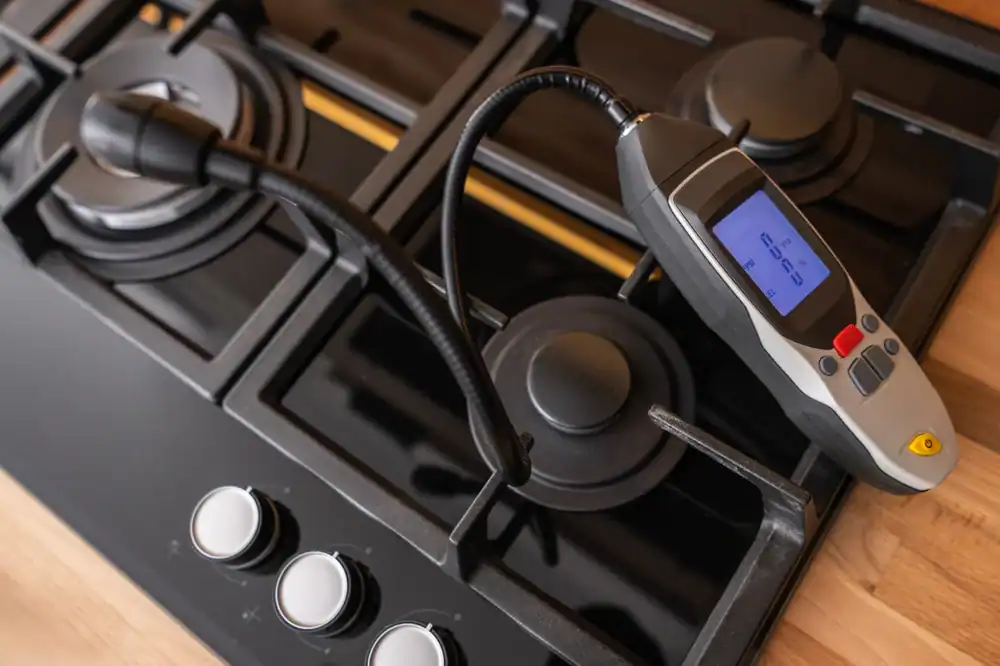
We use two primary tools that go well beyond what a consumer-grade detector from a hardware store can do. The first is a calibrated gas detector — a handheld instrument sensitive enough to identify the presence of natural gas at concentrations far below what the human nose can register. This allows us to pinpoint a slow leak behind a wall or under a floor that would never trigger a smell.
The second is an infrared camera, which detects temperature differentials that can indicate gas escaping through a compromised fitting or joint. This is especially useful in older Prince’s Bay homes where piping runs through finished walls or in areas with limited access. Using both tools together gives you a complete picture of your system — not just a spot check of the most obvious locations.
It depends on your policy and the cause of the leak, but many standard homeowner’s insurance policies do cover damage resulting from a gas leak — including repair costs — when the leak is sudden and accidental rather than the result of deferred maintenance. The key is documentation. An insurance claim for gas leak damage is much easier to support when you have a written report from a Licensed Master Plumber that identifies the source, describes the damage, and outlines the repair.
We work directly with insurance companies when gas leak damage is involved, which takes a significant amount of the administrative burden off you during what’s already a stressful situation. If you’re filing a claim, having a licensed plumber who can communicate with your insurer directly — rather than leaving you to relay technical details back and forth — makes the process considerably more straightforward. It’s worth asking about this when you call, so you know what documentation will be prepared during the visit.
Local Law 152 is a New York City law that requires exposed gas piping in most NYC buildings to be inspected by a Licensed Master Plumber once every four years. It applies to all NYC buildings except one- and two-family homes — so if you own a multi-unit property, a mixed-use building, or a larger residential structure anywhere in Prince’s Bay or along the Amboy Road corridor, your building is almost certainly covered.
The inspection must be performed by or under the supervision of a NYC Licensed Master Plumber, and the certification has to be filed with the NYC DOB within 60 days of the inspection. Missing the deadline or failing to file carries a $5,000 civil penalty. Staten Island buildings are assigned to inspection cycles based on community district, so the specific deadline for your property depends on which district it falls in. We’re licensed to perform the inspection and make any repairs that come out of it — and we handle all the DOB paperwork, so you’re not left figuring out the filing process on your own.
Other Services we provide in Princes Bay