
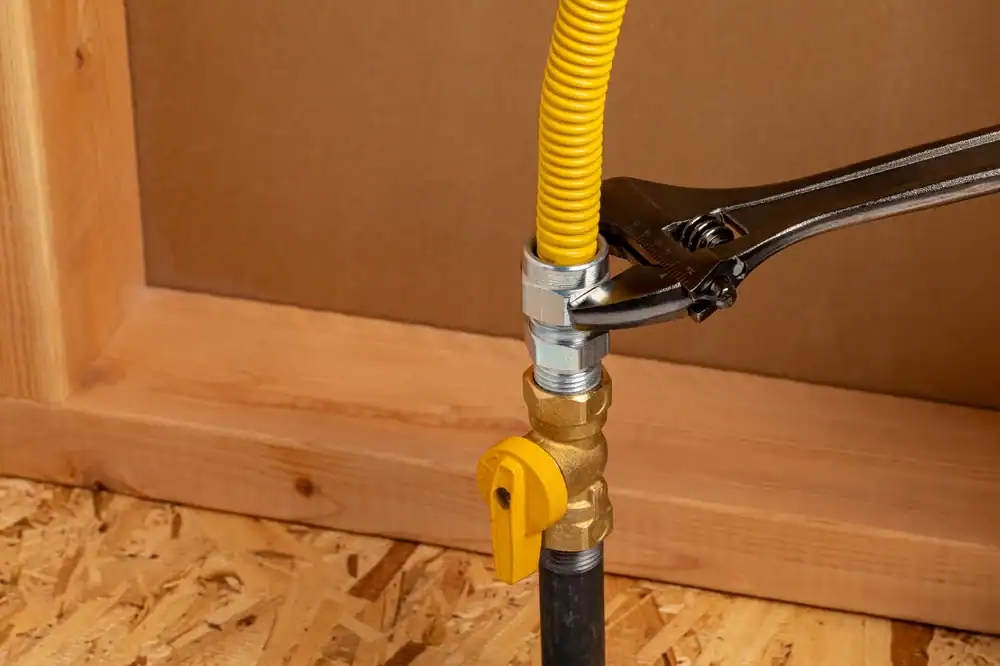

When you upgrade a kitchen, build new, or add a high-BTU appliance, the gas line is the part that has to be right. Not close. Not “probably fine.” Actually right — sized correctly, permitted through the NYC Department of Buildings, and coordinated with National Grid before the meter ever gets turned on. That’s what a finished gas line installation actually looks like in Princes Bay.
Princes Bay is one of the few Staten Island neighborhoods where teardown-and-rebuild construction is still happening at a real pace. New homes on South Shore lots need gas service installed from scratch — load calculations for every appliance, a DOB permit filed through DOB NOW, National Grid authorization, pressure testing, and final documentation. If you’re building or doing a full renovation, the gas line isn’t something you figure out at the end. It gets planned upfront, or it delays everything else.
For homeowners upgrading to a professional-grade range or a tankless water heater, the question isn’t just “can someone hook this up.” It’s whether your existing line is actually sized for what you’re putting in. A line that worked fine for a standard residential stove may not cut it for a high-output burner drawing three to five times the BTU load. Getting that assessment done before the appliance arrives saves you from a frustrating situation where nothing performs the way it should.
We’ve been doing gas line work in New York City since 1983 — over four decades of navigating DOB permits, utility coordination, and the full range of NYC building environments, including Princes Bay’s South Shore single-family homes and the newer construction replacing them.
One thing that matters specifically in Princes Bay: the gas utility here is National Grid, not Con Edison. Those are two different systems with different processes for new service authorization, meter work, and gas restoration. A contractor who only knows one side of that equation can stall your project at the utility coordination stage. We work with both, so the process from permit filing to activation runs the way it’s supposed to.
Every job comes with a Licensed Master Plumber on staff — not a subcontractor, not a name on a license while someone else does the work. The LMP who signs the certification is the same person accountable for the installation. For a neighborhood where homes are selling at or near a million dollars, that level of accountability isn’t optional.

It starts with an assessment. Before any work is quoted or scheduled, we evaluate the existing gas infrastructure — pipe size, current BTU load, the condition of what’s already there, and what the new appliance or renovation will actually demand. If you’re building new or doing a full gut renovation in Princes Bay, that calculation covers every appliance in the home, not just the one being added.
From there, we file the DOB permit through DOB NOW — the NYC Department of Buildings’ all-digital portal. There’s no paper alternative, and there’s no skipping this step. The permit covers the scope of work, and nothing gets installed until it’s approved. For Princes Bay projects, National Grid also needs to authorize any new service or capacity increase before the meter side of the equation is touched. We handle both filings.
Once the installation is complete, the line gets pressure-tested at 1.5 times working pressure — the standard required by the NYC Fuel Gas Code. We use electronic leak detection equipment to verify zero leaks before anything is signed off. After that, National Grid schedules their inspection and activates service. When the job is done, you receive written documentation of everything: the safety test results, permit records, and LMP certification. That paperwork matters for your insurance, your building records, and down the road if you ever sell.
Ready to get started?
Gas line work in Princes Bay covers a wider range than most people expect going in. A straightforward appliance hookup — connecting a new stove or dryer to an existing line — runs $500 to $2,000 for most single-appliance installations. Whole-home installations, which are common in Princes Bay’s active new-construction market, typically range from $1,300 to $3,500. Piping itself runs $12 to $25 per linear foot depending on complexity and pipe type. Every job gets a written estimate before we begin work.
What separates a properly done installation from one that causes problems later is sizing. Italian-American households in Princes Bay who cook seriously — and there are a lot of them — often want professional-grade ranges that draw 40,000 to 60,000-plus BTU. Add a tankless water heater at 150,000 to 199,000 BTU and the math on your existing line changes significantly. Every installation we complete starts with a BTU load calculation that accounts for every connected appliance, not just the one being added.
Beyond residential hookups, we cover new gas service for new construction, gas line replacement in aging 1970s and 1980s homes, outdoor gas connections for grills and generators, boiler gas line work, and post-storm inspections for properties with Raritan Bay coastal exposure. When a nor’easter or tropical storm pushes water into a basement or reaches the meter, gas piping can be compromised in ways that aren’t visible without a proper inspection. That’s a real consideration for South Shore properties, and it’s something a written inspection report from a Licensed Master Plumber addresses directly.
Yes, every gas line installation or alteration in Princes Bay requires a permit filed with the NYC Department of Buildings — there’s no minimum threshold below which a permit isn’t needed. Because Princes Bay is within New York City limits, all gas work falls under NYC DOB jurisdiction regardless of the scope. Permits are filed through DOB NOW, the city’s all-digital portal. Paper submissions are no longer accepted.
Beyond the DOB permit, any work involving new gas service or a capacity increase also requires authorization from National Grid, which is the gas utility serving all of Staten Island. That’s a separate coordination step from the DOB permit, and it has to happen before National Grid will activate or modify service at the meter. We handle both filings as part of the installation process, so you’re not navigating two different bureaucratic systems on your own.
The short answer is that you can’t know without a proper load calculation — and assuming it’s fine is how you end up with an appliance that underperforms or a code violation you didn’t see coming. Gas line sizing depends on the total BTU demand of every appliance connected to the line, the diameter and length of the pipe, and the gas pressure available at the meter. A line that adequately served a standard residential range may not support a professional-grade burner drawing three to five times the BTU load.
This matters in Princes Bay specifically because the neighborhood has a high rate of kitchen renovations and appliance upgrades. Homes built in the 1970s and 1980s — a significant portion of the South Shore housing stock — were sized for appliances from that era. If you’re upgrading to a high-output range, adding a tankless water heater, or installing an outdoor gas connection, the existing line needs to be evaluated before the new appliance is delivered. We do that assessment as the first step, so you know what you’re working with before any money is spent on installation.
New construction gas service in Princes Bay involves more steps than a simple appliance hookup, and it needs to be planned early in the project — not treated as a last item on the punch list. The process starts with a full BTU load calculation for every appliance in the home, which determines the correct pipe sizing for the main line and all branch lines. From there, a DOB permit gets filed through DOB NOW, and National Grid needs to authorize new service before the meter connection is made.
Princes Bay is one of the few Staten Island neighborhoods where teardown-and-rebuild construction is still happening at a noticeable pace, so this isn’t an unusual scenario here. The key timing issue is that the gas line installation has to be completed, pressure-tested, and inspected before a Certificate of Occupancy can be issued. Delays at the utility coordination stage — particularly if National Grid authorization hasn’t been requested early enough — can push that timeline back significantly. Having a Licensed Master Plumber managing the permit and utility coordination from the start keeps the project on schedule.
Yes, and this is something South Shore homeowners specifically should take seriously. Princes Bay fronts Raritan Bay directly, which means significant storm events — nor’easters, tropical storms, and hurricanes — can push water into basements and reach gas meters and service lines. When that happens, gas piping can be compromised in ways that aren’t visible from the outside: corrosion at joints, displaced fittings, or damage to the service connection that a utility company won’t necessarily catch when they restore meter service.
The concern isn’t just whether the gas smells right. It’s whether the piping system is structurally sound after being exposed to floodwater. We can inspect the full system using electronic leak detection equipment, pressure-test the line, and provide written documentation confirming the system is safe — or identify exactly what needs to be repaired before service resumes. That documentation also matters for your homeowner’s insurance if a claim is involved. For any Princes Bay property that’s experienced basement flooding or storm surge, a post-event gas inspection is a straightforward protective step.
The physical installation itself — running pipe, making connections, and pressure-testing — typically takes anywhere from a few hours for a single-appliance hookup to a full day or more for a larger project involving multiple appliances or new construction. That part of the timeline is usually the most predictable. What adds time is the permitting and utility coordination on either side of it.
The DOB permit needs to be filed and approved before work begins, and National Grid’s authorization and inspection scheduling adds additional time after the installation is complete. For most straightforward projects in Princes Bay, the full process from permit filing to National Grid activation runs a few days to about a week under normal conditions. Larger projects — whole-home installations, new construction, or jobs that require upsized service from National Grid — can take longer depending on utility scheduling. The best way to get an accurate timeline for your specific project is to get a written estimate early, so the permit and utility coordination can start as soon as possible rather than after the work is already done.
The first thing to verify is whether the contractor holds a Licensed Master Plumber credential registered with the NYC Department of Buildings. In New York City, only an LMP can legally perform gas line work — this isn’t a preference, it’s state law. You can check any contractor’s LMP status directly through the NYC DOB license lookup tool. If someone can’t give you a verifiable license number, that’s the end of the conversation.
Beyond the license, ask specifically whether they’ve worked with National Grid on Staten Island. Contractors who primarily work in Manhattan are familiar with Con Edison’s processes, which are different from National Grid’s authorization and inspection procedures. A contractor who hasn’t navigated National Grid before can create delays at the utility coordination stage that push your project back by days. Also ask whether they pull the DOB permit themselves or expect you to handle it, and whether they provide written documentation after the job — safety test results, permit records, and LMP certification. In Princes Bay, where homes are selling at or near a million dollars, that paper trail is part of what protects your investment long after the installation is done.
Other Services we provide in Princes Bay