

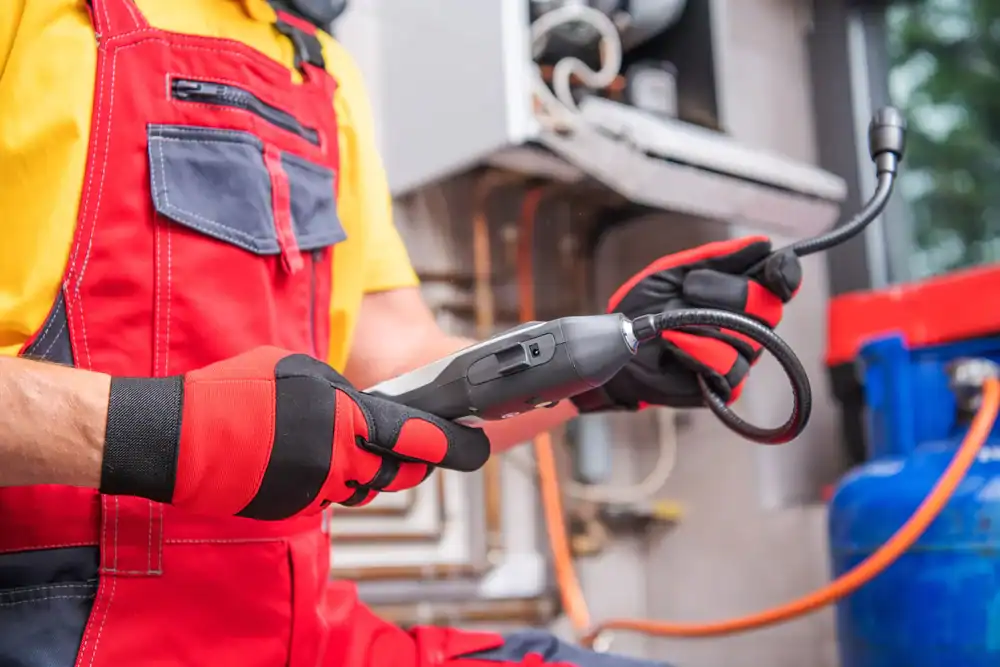
Most of Tompkinsville’s housing stock was built before 1939. That’s not a selling point for the gas lines. Iron and galvanized steel piping, aging flexible connectors behind stoves, and joints that have been under pressure through every nor’easter and heat wave since the Truman administration — these are the systems that need a real inspection, not a quick visual and a shrug. When you get a professional gas leak detection done right, you stop guessing and start knowing exactly what’s going on inside your building.
Tompkinsville’s waterfront position on Upper New York Bay adds another layer that inland Staten Island neighborhoods simply don’t deal with. Salt air and coastal humidity accelerate corrosion on exposed metal piping faster than most people realize. That slow, invisible process is exactly why a leak can develop in a building with no history of problems — the pipes weren’t neglected, they were just old and exposed to conditions that wear them down quietly over time.
After a proper inspection, you get a clear picture: where the system is solid, where it’s showing wear, and whether anything needs immediate attention. If repairs are needed, you’ll know the scope and the price before any work begins. No surprises, no pressure, no inflated bill at the end.
We’ve been doing this work in New York City since 1983. That’s over four decades of working inside pre-war apartment buildings, co-ops, multifamily walk-ups, and the kind of aging urban infrastructure that newer suburban plumbers rarely encounter. Bobby and Rob — the father-and-son team behind RB Mechanical Plumbing and Heating — have seen what happens when old gas systems in Tompkinsville and across Staten Island go uninspected for too long. We’ve also seen what peace of mind looks like when a building owner finally gets a straight answer.
Every technician who shows up is a NYC Licensed Master Plumber. Not a subcontractor, not a supervised journeyman working under someone else’s license — a Master Plumber. That credential matters here because National Grid, which handles gas distribution across Staten Island including Tompkinsville, requires a Licensed Master Plumber to make building-side repairs before they’ll restore service after a shutoff. You don’t want to find that out the hard way in the middle of a Tompkinsville winter.
Every technician is also drug-tested and vetted before they ever knock on a door in this neighborhood. In a community where residents live close together and building access matters, that’s not a footnote — it’s a baseline standard we maintain.

When you call for a gas leak inspection in Tompkinsville, the first thing that happens is a real conversation — not a sales pitch. You describe what you’re noticing: a smell that comes and goes, a hissing sound near the stove, a National Grid notice, or just the fact that your building is old and you’ve never had the gas lines looked at. That context shapes where the inspection starts.
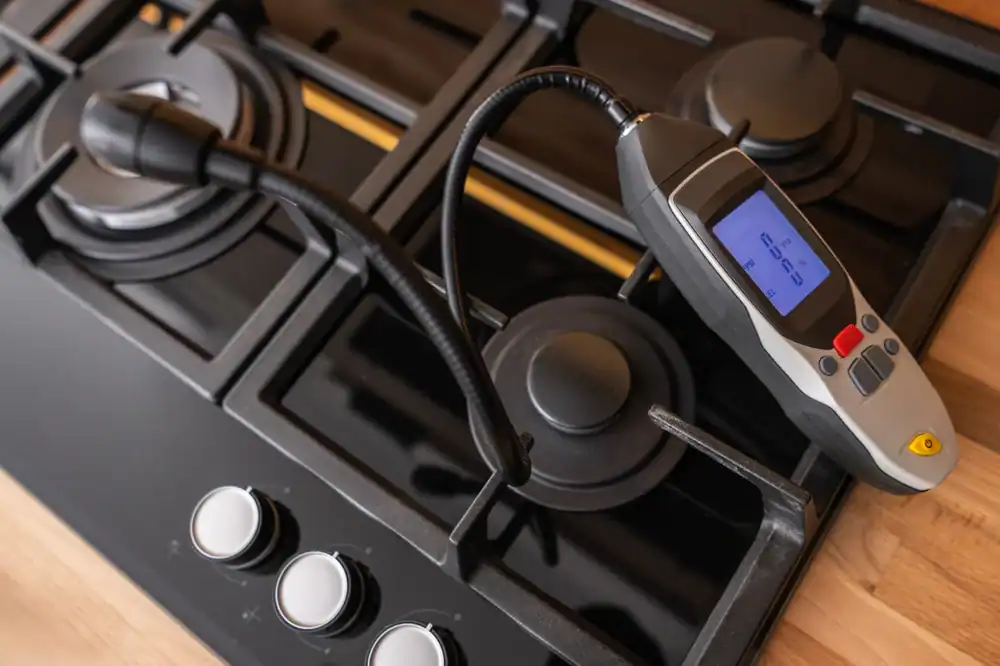
On-site, we use professional-grade gas detectors and infrared cameras to assess the full system — not just the obvious spots. Infrared cameras are particularly useful in Tompkinsville’s older building stock because they can identify temperature anomalies behind walls and under floors without any demolition. Gas can accumulate in enclosed spaces inside a pre-war building without ever producing a smell you’d notice from the kitchen. The equipment finds what your nose cannot.
If a leak or a compromised section of piping is found, you’ll get a clear explanation of what was found, where it is, and what the repair involves — with pricing stated upfront before any work begins. If the situation requires a permit or DOB filing, we handle that too. For building owners in Tompkinsville who are also navigating Local Law 152 compliance for Community District 1, the inspection and any required repairs can be addressed in the same visit, with us managing the full documentation and filing process.
Ready to get started?
Gas leak detection in Tompkinsville isn’t just about finding the source — it’s about what comes next. We handle the complete workflow: detection, repair, permit filing, DOB coordination, and if your building is subject to Local Law 152, the inspection certification that gets filed with the NYC Department of Buildings. Tompkinsville falls within Staten Island Community District 1, which completed its 2024 Local Law 152 inspection cycle. Building owners who missed that window are still facing a $5,000 civil penalty and need to get compliant now — not at the next cycle in 2028.
We also address the natural gas detector requirements under Local Law 157, which mandates compliant detectors in all NYC residential units by January 1, 2027. For Tompkinsville’s dense stock of older apartment buildings, that’s a real near-term obligation. Detectors need to be installed within one foot of the ceiling and within ten feet horizontally of gas appliances — a straightforward requirement that’s easy to miss if no one’s told you about it.
When National Grid shuts off gas service to a Tompkinsville building, they handle the utility side and leave. The building-side repair is your responsibility, and only a Licensed Master Plumber can legally do it. We respond to true emergencies within 30 to 60 minutes, make the required repairs, and coordinate directly with National Grid to get your service restored as quickly as possible. That’s the full picture — not just a leak check, but everything that follows it.

The first move is to get out. Don’t stop to open windows, turn off appliances, or grab your phone from a charger — just leave the building and get clear of the entrance. Once you’re outside, call National Grid’s emergency line at 718-643-4050 or call 911. National Grid handles Staten Island’s gas distribution and will dispatch a crew to assess the utility side of the situation. Do not re-enter the building until they’ve cleared it.
Here’s what a lot of Tompkinsville residents don’t realize: National Grid handles the street-side and utility infrastructure, but they do not repair building-side gas piping. Once they make the area safe and potentially shut off gas service to the building, the next call is to a Licensed Master Plumber. That’s where we come in — we assess the building-side system, make the necessary repairs, and coordinate with National Grid to get service restored. In an older Tompkinsville building where the gas infrastructure may be decades old, getting that building-side inspection done right is what prevents the same situation from happening again.
A smell that comes and goes is not a leak that comes and goes. The odorant added to natural gas — a compound called mercaptan — can dissipate through physical and chemical processes, especially in older buildings with more surface area for it to absorb into walls, aged piping, and building materials. In Tompkinsville’s pre-war housing stock, this is a real and documented phenomenon. The absence of a smell does not mean the absence of a leak.
This is one of the most dangerous assumptions a resident can make. A slow leak in an enclosed space — a utility closet, a basement, a gap behind an old stove connection — can accumulate gas to dangerous concentrations without ever producing a consistent odor at the kitchen or hallway level. Consumer-grade home detectors can alert you if concentrations get high enough, but they can’t tell you where the source is or how serious the situation is. Professional-grade detection equipment, used by a licensed technician, can identify a leak that your nose has already stopped registering. If you smelled something once and it went away, that’s a reason to call us — not a reason to wait.
No, and this is a distinction that catches a lot of Staten Island building owners off guard. National Grid is responsible for the distribution infrastructure — the gas mains running under the streets and the service line up to the point where gas enters your building. Everything on the building side of that connection is the property owner’s responsibility. If National Grid responds to a leak call and determines the problem is inside your building, they will make the immediate area safe and may shut off gas service — but they will not make the internal repairs.
To get gas service restored, you need a Licensed Master Plumber to identify and fix the building-side issue and then document the repair for National Grid. This is true whether you’re dealing with a corroded pipe in a Tompkinsville pre-war walk-up, a faulty connector behind a stove on Bay Street, or a deteriorating joint in a basement boiler room. We hold the Master Plumber licensing that satisfies this requirement and have the working relationship with National Grid to move the restoration process forward efficiently.
Yes, Local Law 152 applies to all NYC buildings except one- and two-family homes, which means the majority of Tompkinsville’s multifamily and mixed-use building stock is covered. Tompkinsville is part of Staten Island Community District 1, which was assigned the January 1 through December 31, 2024 inspection window. If your building’s inspection wasn’t completed and the certification wasn’t filed with the NYC Department of Buildings within 60 days of the inspection, you are currently out of compliance.
The penalty for non-compliance is a $5,000 civil fine — and it doesn’t disappear because the window has passed. The right move now is to get the inspection done, address any required repairs, and file the certification as quickly as possible to limit further exposure. We’re licensed to perform Local Law 152 inspections, make any repairs the inspection identifies, and handle the DOB filing from start to finish. You don’t need to coordinate multiple contractors or figure out the paperwork on your own — the entire compliance process is handled in one place.
For a standard residential unit or small multifamily building, a professional gas leak detection visit typically takes between one and two hours. Larger buildings with more extensive gas systems — the kind of older multifamily structures common in Tompkinsville — can take longer depending on how many units, appliances, and sections of piping need to be assessed. The goal is thoroughness, not speed, because a rushed inspection in a building with aging infrastructure is not actually an inspection.
The visit is non-invasive in most cases. Professional-grade gas detectors and infrared cameras allow us to assess conditions behind walls and under floors without opening anything up unless a specific issue is identified. If a leak or compromised section is found, we’ll explain what was found and what the repair involves before any work begins. In Tompkinsville’s pre-war buildings, where gas piping may run through finished walls and original plaster, the infrared camera capability is particularly useful — it avoids unnecessary demolition while still giving you a complete picture of the system’s condition.
The honest answer is that building age is one factor, but it’s not the only one. Tompkinsville is currently in the middle of significant construction activity — the Tompkinsville Esplanade project, Lighthouse Point, and the broader Bay Street Corridor infrastructure work involve active excavation near aging underground gas mains. Ground disturbance close to existing gas infrastructure is a documented cause of pipe stress and leak events, even in buildings that were perfectly fine before construction started. If your building is on or near the Bay Street corridor, proximity to active excavation is a legitimate reason to have your gas system checked regardless of when it was built.
Beyond construction risk, Local Law 157 applies to all NYC residential units — new and old alike. Every residential building in Tompkinsville needs compliant natural gas detectors installed by January 1, 2027, positioned within one foot of the ceiling and within ten feet horizontally of any gas appliance. That requirement doesn’t have a building-age exemption. A gas safety visit from us can cover both the leak detection and the detector compliance question in a single appointment, so you’re not making two separate calls to address two related issues.
Other Services we provide in Tompkinsville